Travel guide
Dien Tho and An Dinh: life behind two Hue facades
A handsome facade is a starting point. At two Nguyen-associated residential settings, distinguish occupants, functions and building phases before telling an interior story.
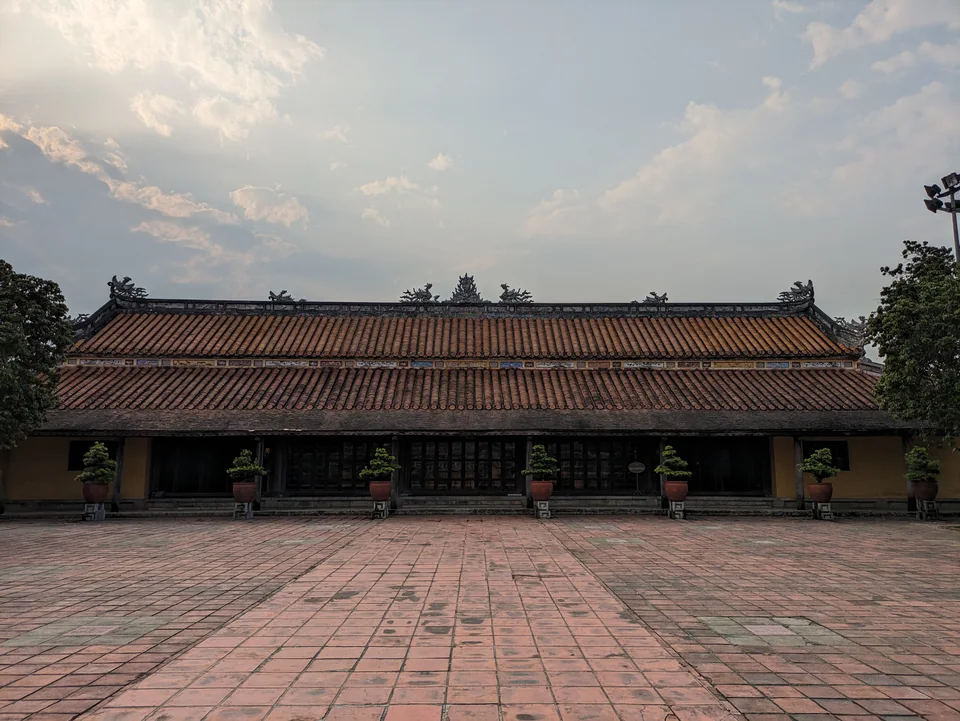

Dien Tho and Truong Sanh: another side of royal life
Dien Tho developed as a residence for queen mothers, with construction beginning in 1803. Its buildings were added to and adapted through different reigns, so the ensemble should not be read as one untouched design from one moment. A recent Vietnam News Agency photo report highlights its variety of halls, pavilions and other structures. Look at the relationship between a principal building and the courtyards and smaller spaces around it. This is a useful change of scale after Thai Hoa: royal status expressed through an inhabited precinct rather than a court assembled before the throne.
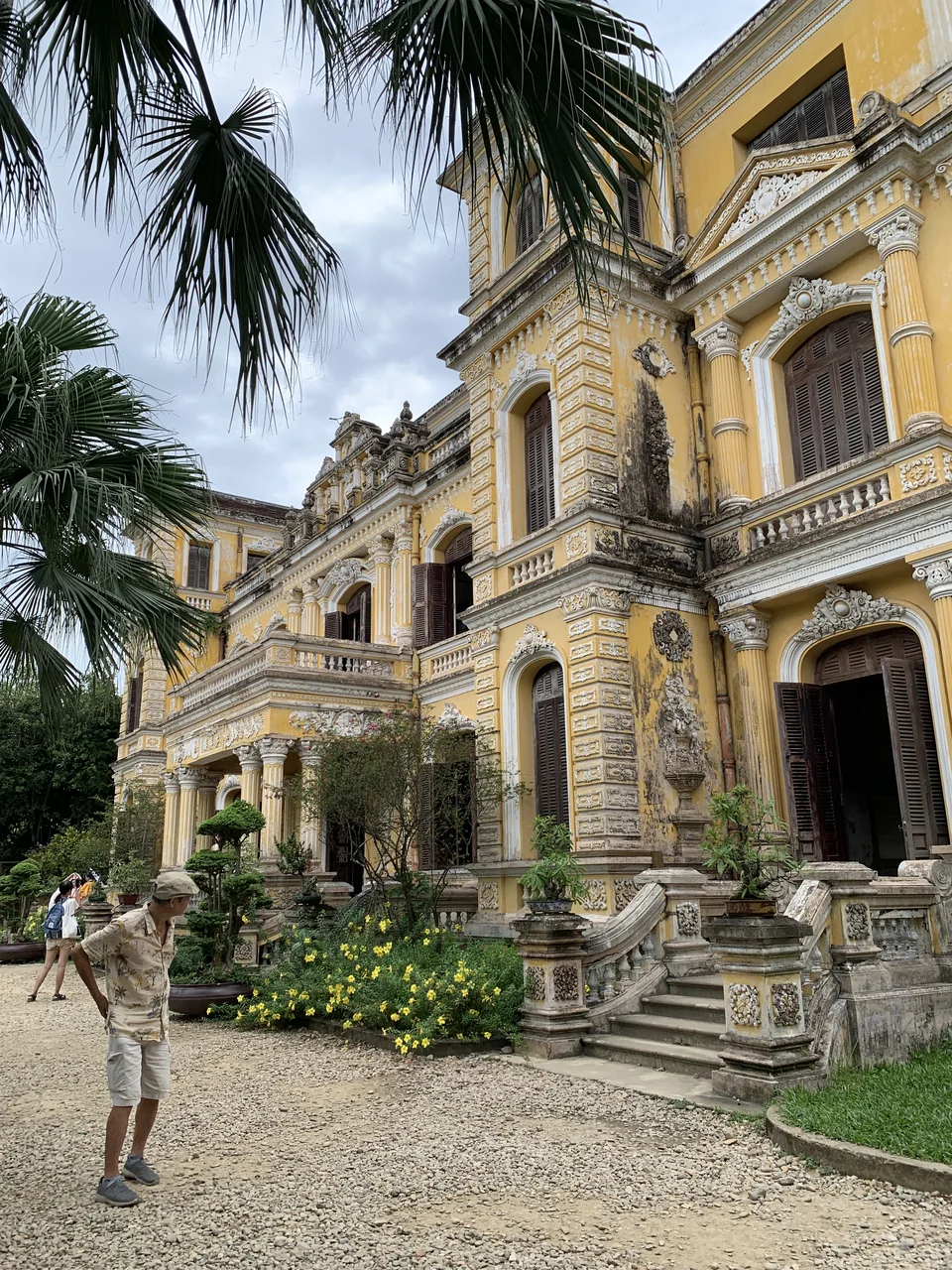

An Dinh Palace: architecture and late Nguyen memory
Khai Dinh initiated a rebuilding of An Dinh in 1917. The entrance and the octagonal Trung Lap pavilion prepare the approach to the three-storey Khai Tuong building. Look for the contrast between traditional decorative subjects and the European architectural vocabulary of the main façade. Porcelain and glass ornament on the gate rewards a closer look, while the composition across the grounds helps explain how separate elements form a palace ensemble. This is not simply a smaller version of the ceremonial spaces inside the Citadel; the architectural language gives it a distinct identity.
A comparison notebook for your visit
| Choice | What to consider |
|---|---|
| Dien Tho | Dien Tho: connect queen-mother residence with its halls and courts; do not turn every room into a ceremonial space. |
| An Dinh | An Dinh: use the Khai Tuong name and sourced dates to interpret the setting. An exterior photograph does not prove interiors are open. |
| Comparison card | Comparison card: who – what use – which building phase. Mark unconfirmed interiors and access as unknown. |
Ask VietnamGuide AI
Ask VietnamGuide AISources
- 1. khamphahue.com.vn/Du-lich/Ban-%C4%91o-so/WC-cong-cong/pid/1584/cid/28
Source checked:
- 2. khamphahue.com.vn/desktopmodules/DNNTinBai/PrintTinBai.aspx
Source checked:
- 3. www.vietnamplus.vn/cung-dien-tho-noi-tap-hop-dien-hinh-cac-phong-cach-kien-truc-thoi-nguyen-post1109974.amp
Source checked:
- 4. dsvh.gov.vn/di-tich-lich-su-va-kien-truc-nghe-thuat-quan-the-kien-truc-co-do-hue-2944
Source checked:
- 5. vietnamtourism.vn/index.php/tourism/items/2853
Source checked:
- 6. vietnam.diplo.de/vn-vi/%C4%91%E1%BB%A9c-vi%E1%BB%87tnam/aktuelles/160824-an-dinh-palast-1254146
Source checked:
Explore more
- Hue beyond the throne: Dien Tho and Tu Hieu
Look beyond emperors’ biographies through two different traces: a queen-mother residence and remembrance of court workers. Neither place tells the whole story of the people associated with it.
- Bridge or gate: two kinds of passage in Hue
A village bridge and an imperial gateway both cross a boundary, but serve different purposes. Read function at Thanh Toan and Ngo Mon before looking for a photograph.
- Museum objects and the Nine Urns: two kinds of historical evidence
An exhibited object and a scene cast in bronze can both evoke life, yet provide different evidence. Try a two-column notebook while exploring Hue.