Travel guide
Bridge or gate: two kinds of passage in Hue
A village bridge and an imperial gateway both cross a boundary, but serve different purposes. Read function at Thanh Toan and Ngo Mon before looking for a photograph.
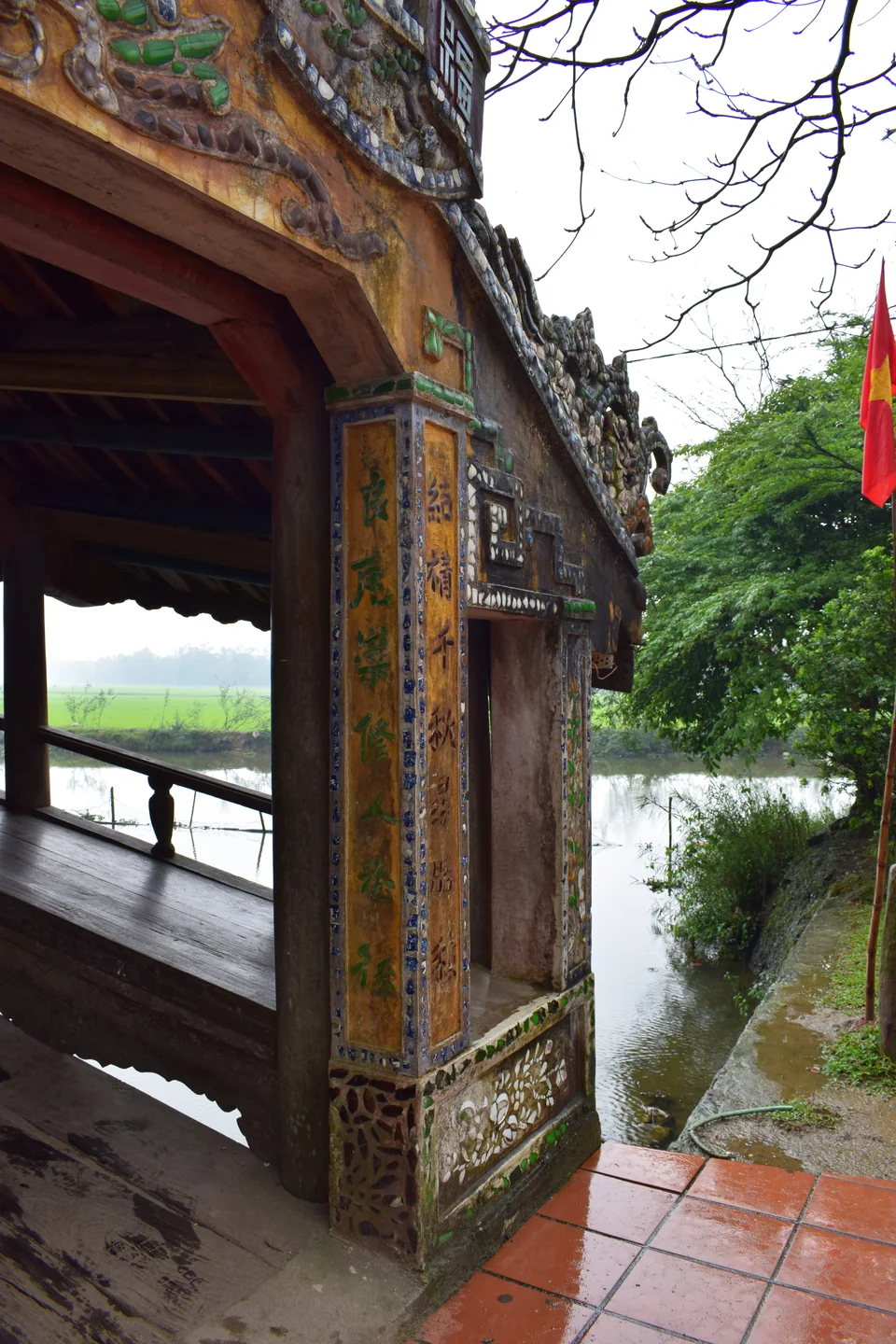

Thanh Toan Tile Bridge: village architecture over water
The architectural idea is called thuong gia ha kieu: a house above, a bridge below. Seven bays organise the timber structure, with a passage through the middle and raised resting platforms along the sides. Look at that arrangement before concentrating on decoration: it explains how movement and shelter share one small building. A glazed-tile roof and dragon-and-phoenix motifs add a distinctly worked silhouette. From the bank, compare the roof's outline with the supports and water beneath it. This is Thanh Toan near Hue, a separate place from Hoi An's Japanese Covered Bridge, despite the broad family resemblance of roofed crossings.
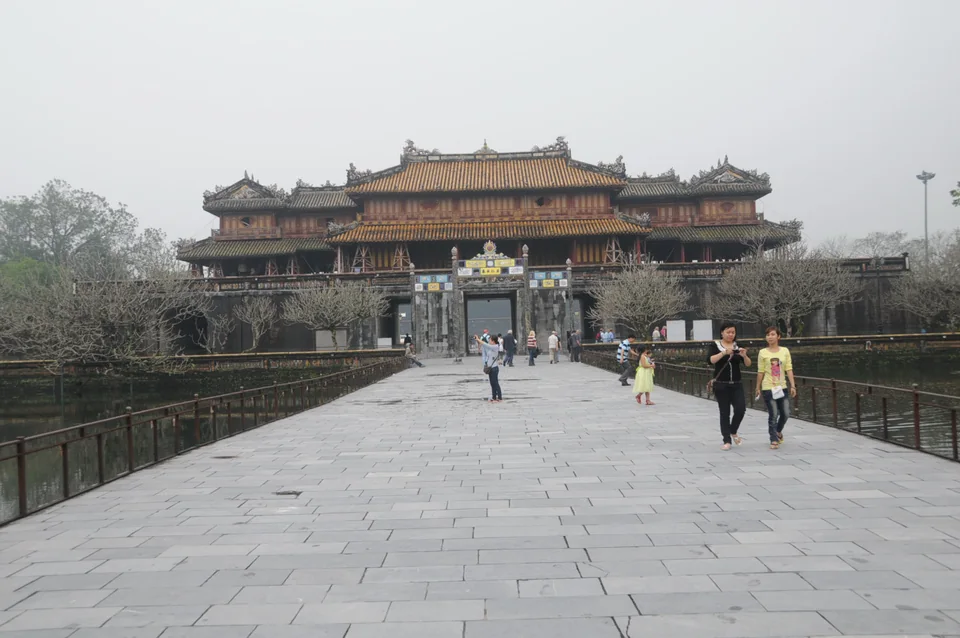

Ngo Mon and Thai Hoa Palace: read Hue’s ceremonial axis
Ngo Mon is the main southern gate of the Imperial City, not simply a doorway into the whole outer Citadel. Its name refers to its southern orientation rather than a rule that it opened at noon. Look at the contrast between the substantial masonry platform and the timber Ngu Phung, or Five Phoenix, pavilion above it. The gate passages once separated the emperor’s movement from that of attendants. The pavilion made the threshold a place of public royal appearance as well as passage. In 1945, Bao Dai’s abdication ceremony took place here, adding a different ending to its imperial story.
A comparison notebook for your visit
| Choice | What to consider |
|---|---|
| Thanh Toan | Thanh Toan: notice the crossing, shelter and places to pause; people using the bridge are not photographic props. |
| Ngo Mon | Ngo Mon: identify the approach axis and ceremonial sequence. Today’s visitor path need not reproduce the route once assigned to the court. |
| Exercise | Exercise: draw two arrow diagrams, separating visible features from interpretation needing a guide. This comparison does not promise an unverified timed itinerary. |
Ask VietnamGuide AI
Ask VietnamGuide AISources
- 1. bvhttdl.gov.vn/khanh-thanh-cong-trinh-trung-tu-va-xuc-tien-du-lich-cong-dong-cau-ngoi-thanh-toan-20210426080010838.htm
Source checked:
- 2. ttdn.vn/hoi-nhap-va-phat-trien/van-hoa-xa-hoi/ghe-tham-cay-cau-ngoi-thanh-toan-247-tuoi-ben-dong-song-nhu-y-93037
Source checked:
- 3. vietnam.travel/places-to-go/north-central-coast/hue
Source checked:
- 4. huetourism.gov.vn/chiem-nguong-bon-cua-vao-hoang-thanh-hue/
Source checked:
- 5. huetourism.gov.vn/Dien-Thai-Hoa.html/
Source checked:
Explore more
- Hue beyond the throne: Dien Tho and Tu Hieu
Look beyond emperors’ biographies through two different traces: a queen-mother residence and remembrance of court workers. Neither place tells the whole story of the people associated with it.
- Museum objects and the Nine Urns: two kinds of historical evidence
An exhibited object and a scene cast in bronze can both evoke life, yet provide different evidence. Try a two-column notebook while exploring Hue.
- Dong Khanh and Thien Mu: one monument name, several building periods
Do not attach every visible structure to a single foundation date. These Hue sites help separate the history of a place from the age of its individual parts.