Travel guide
Mnong culture around Lak Lake: listen beyond the longhouse
The lake is not merely a backdrop to culture: it helps explain why settlements, work and stories belong together here. Around Lak, a cultural encounter becomes more rewarding when you ask how people live today, alongside what they choose to remember. A longhouse photograph is a beginning, not the whole account.
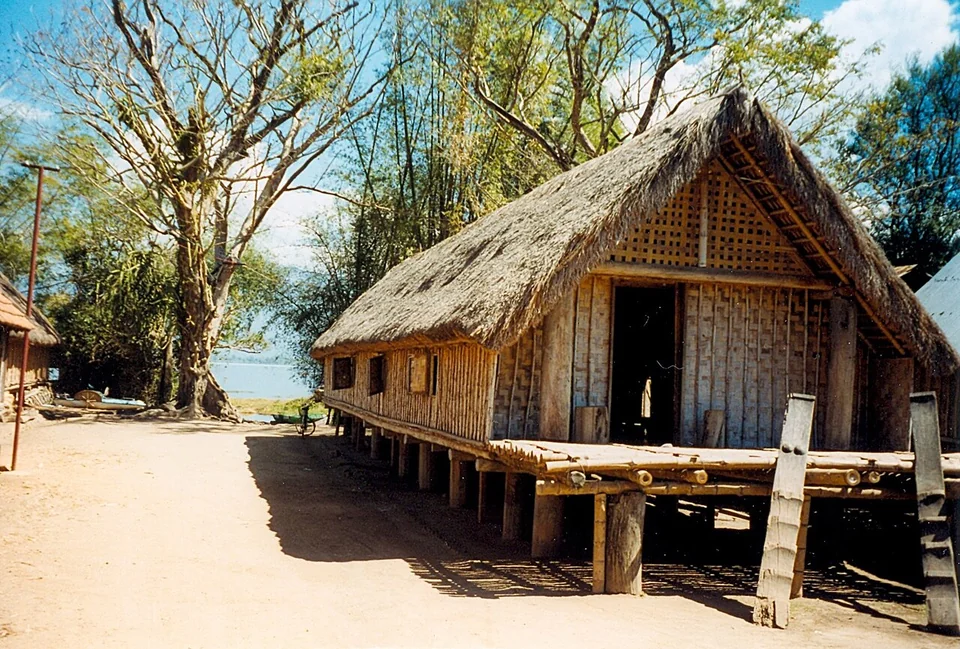

Begin with the right community name
Official provincial descriptions identify Mnong communities around Lak Lake, including Jun and Mlieng. Mnong and Ede are not interchangeable names for a single Central Highlands culture. Nor does meeting one family give a complete picture of every Mnong community. Ask your host how they describe their own village and which parts of local life they would like to explain. Names may appear in several romanised spellings; listening to the way someone introduces their home is more useful than insisting that a travel website must have the only correct form. Keep that distinction when writing a caption or describing the visit to other travellers.
Read the lake as part of daily life
A boat, a path toward the water and a field seen behind a house connect a community to its surroundings. Start with these relationships rather than collecting isolated cultural symbols. Ask how work changes when the water or weather changes, or why a particular object is kept where it is. The answer may concern an ordinary practical task rather than a dramatic ancient custom, and that is valuable. National tourism coverage describes the lake as a source of livelihoods as well as scenery. Do not assume everyone you see is working in tourism, and do not interrupt a task simply because it would make an attractive photograph.
Let objects lead to a personal explanation
Provincial cultural coverage mentions traditional raised houses, gongs, drums and jars associated with Mnong life around the lake. These are useful prompts for questions, not a checklist that every house must display. An object can have a household history that differs from a general museum label. Ask who uses it, when it is used and whether the host is comfortable discussing it. Looking at an instrument is not an invitation to play it, and seeing a ceremonial object does not entitle a visitor to a ritual. A thoughtful explanation of one item often reveals more than a staged room full of things whose meaning nobody has time to discuss.
Distinguish a story from an operating programme
Lak Lake has local legends, and a host may choose to tell a version that gives the landscape another layer of meaning. Receive a story as a story, not as a geological explanation or a script every resident is obliged to repeat. Likewise, a photograph of music at a festival does not mean a performance is available every evening. If a hosted music event is offered, ask who participates, how it is arranged and how the performers are paid. Leave religious occasions and family ceremonies to the people concerned unless guests are explicitly welcomed. Culture remains meaningful when not everything is made available on demand.
Make hospitality a two-way encounter
A shared meal can give questions time to become a conversation. Agree the practical arrangement beforehand, then allow space for what the host wants to ask you as well. Learn a name, listen to the explanation of a dish and avoid ranking the family by how closely it resembles a tourist image of tradition. Contemporary clothes, phones or a new kitchen do not cancel cultural identity. Request permission for portraits, respect refusal and pay the agreed person for their work. Leave with a specific memory of a person or story, while recognising that a short visit offers a window rather than ownership of somebody else’s culture.
Ask VietnamGuide AI
Ask VietnamGuide AISources
- 1. daklak.gov.vn/web/english/-/the-legend-of-lak-lake-
Source checked:
- 2. daklak.gov.vn/-/cong-bo-iem-en-du-lich-cong-ong-buon-jun-huyen-lak
Source checked:
Explore more
- Where to stay at Lak Lake: choose the experience before the view
Compare a village homestay with lakeside tented accommodation at Lak Lake, looking at hosting, privacy, meals, actual access and transfer costs.
- Yang Tao pottery: meet the hands behind the clay
Explore Mnong pottery associated with Yang Tao near Lak Lake: hand-built forms, craft knowledge, arranging an artisan visit and choosing a piece to take home.
- Lak Lake at dawn and dusk: photograph the water, not a promise
Plan sunrise and sunset photographs at Lak Lake with shore scouting, changing water levels, thoughtful compositions and respect for the people in your frame.