Travel guide
Pu Luong rice terraces: plan for the farming stage, not one perfect week
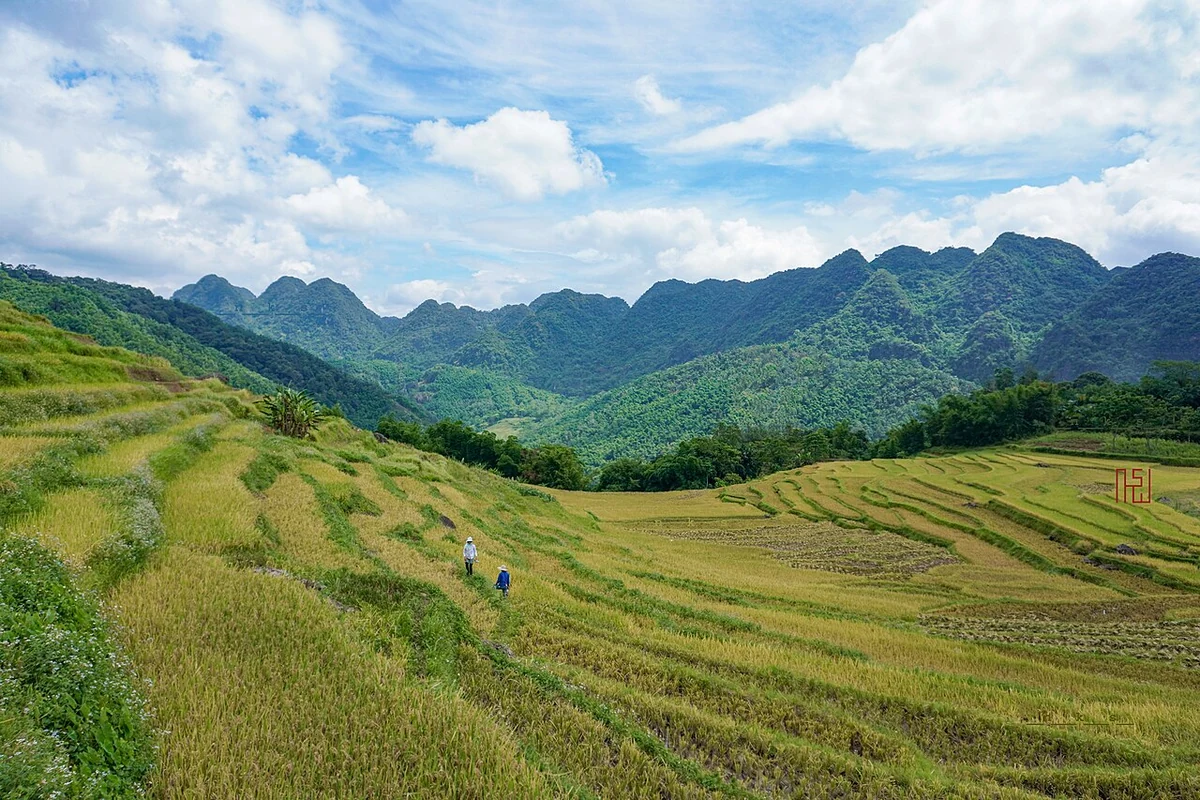
Pu Luong’s terraces are beautiful because they are productive fields. Their appearance changes as water is admitted, seedlings establish, plants fill out and the crop is cut. A photograph of yellow rice describes one place at one moment, not a promise for the whole destination. Decide which stage interests you, then ask about the actual valley and slope around your accommodation. This gives you a better chance of enjoying the landscape you find.

Recognise the stages you are looking at
Water-filled terraces can catch the sky and outline the shape of each field; newly planted rows reveal the work of cultivation; a developed green crop emphasises the curves of the slopes. Ripening rice brings warmer colour, while harvested plots expose stubble, earth and patterns of work. None is simply the absence of the famous golden view. If reflection photography matters to you, discuss water and planting rather than asking only whether the rice is ready. If you want to understand farming, a field being worked can offer more than an untouched panorama.
Use the calendar as a starting point
Thanh Hoa reporting describes two broad harvest periods, around May–June and September–October, while operator descriptions give their own crop windows. These are useful planning clues, not dates to apply to every hillside. Weather, the planting decision and the particular field all matter. A month named in a guide cannot establish that rice will still be standing on your arrival day. For a trip built around one colour, choose flexible travel dates where possible and ask for a recent, clearly dated photograph from the place you are actually booking.
Compare valleys without chasing every viewpoint
A balcony overlooking Don and a walk in another valley do not necessarily show the same stage at the same time. Height, aspect, water supply and household decisions can produce a patchwork even within one view. Ask a host to identify which fields in the photograph belong to the immediate surroundings, and whether the proposed walk reaches them on public or permitted paths. Rather than adding multiple distant stops, spend time on one slope at different hours. You may notice the way light reveals irrigation lines, village roofs and the edge of the forest.
Turn the visit into a farming conversation
A respectful question about where the water comes from can open the landscape up. Ask a willing host or guide how the fields are maintained, which paths are used during busy work and whether this is planting or cutting time locally. Listen without expecting every household to follow the same method. Keep your position on an established path, especially when a narrow ridge separates wet plots. A field edge is not automatically a visitor platform. Close-up photographs work best with permission and enough space for farmers to continue rather than perform their work for the camera.
Build a stay that works after the colour changes
Choose accommodation for its setting and practical access as well as the view in a seasonal advertisement. A stay can still be rewarding after harvest if it offers walks through villages, good meals and time to follow water, birds and cloud around the valley. Keep a wider composition in mind: terraces sit beside forested hills and raised houses, so there is more to see than one crop colour. If a forecast or recent photograph changes your expectations, adjust the walk rather than demanding that a living agricultural landscape match a booking image.
Ask VietnamGuide AI
Ask VietnamGuide AISources
- 1. baothanhhoa.vn/e-magazine--co-hen-voi-pu-luong-193659.htm
Source checked:
- 2. baothanhhoa.vn/pu-luong-mua-vang-dang-goi-249116.htm
Source checked:
Explore more
- Multi-day trekking in Pu Luong: build the stages before booking the beds
Design a Pu Luong trek around village-to-village stages, gradients, local guidance and luggage arrangements rather than a list of famous stops.
- Thai and Muong culture in Pu Luong: meet communities beyond the scenery
Explore Pu Luong’s living Thai and Muong communities through stilt houses, weaving, meals and respectful visits without treating traditions as a fixed show.
- Pu Luong slow travel: choose a countryside stay that fits your walking
A practical guide to choosing a Pu Luong village base, manageable walks and a rewarding stay among rice terraces, stilt houses and forested slopes.