Travel guide
Thai and Muong culture in Pu Luong: meet communities beyond the scenery
The raised houses and terraces of Pu Luong are more than a photogenic backdrop. They belong to households with work, family histories and changing expectations of tourism. Official destination descriptions identify both Thai and Muong communities in the area; those names should not be used interchangeably. A rewarding visit begins with curiosity about the particular family and village you are meeting, rather than a checklist of customs you expect them to display.

Ask who lives in the village you are visiting
Do not infer someone’s identity from a building, outfit or souvenir stall. Thai and Muong are distinct communities, and a regional label does not describe every household in a particular hamlet. A guide or host can explain how people identify themselves and which traditions are important locally. Keep questions open: what is this building used for, who made the cloth, how does a household’s day change during harvest? These conversations are more informative than asking a person to confirm an exotic story read elsewhere or to represent an entire ethnic group.
Look at a house as a household space
A stilt house brings together architecture and everyday life: the approach, stairs, shared floor and spaces used for cooking, receiving people or sleeping. Their uses vary, and visitor accommodation may have adapted an older layout. Ask where to leave shoes, which room or raised area is private, and where the family would like guests to sit. A camera does not make a domestic interior public. If the house has been converted for tourism, understanding what changed can be as interesting as identifying a feature described as traditional in an advertisement. Local reporting in Lan Ngoai describes Thai stilt homes with tiled roofs and spaces for family and ancestor ceremonies. These are household practices, not an invitation to attend a ritual.
Let a craft conversation begin with the maker
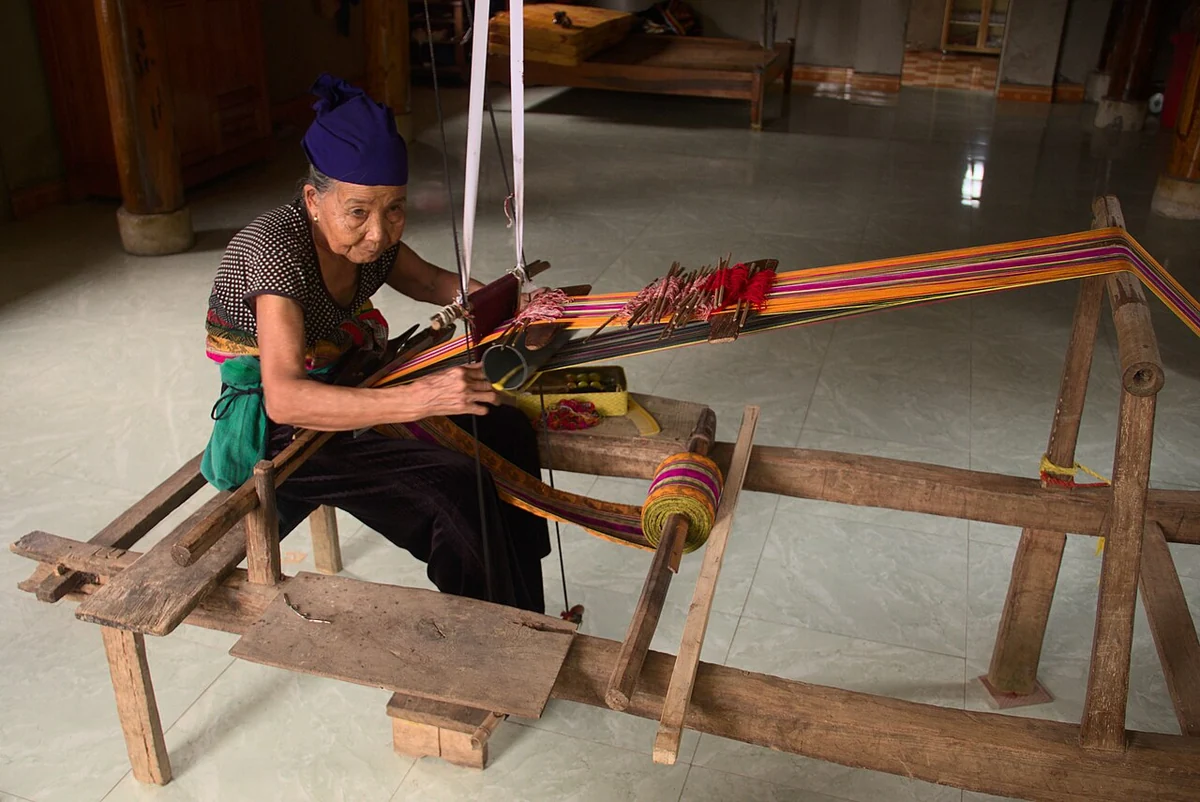
Weaving and embroidery are part of the cultural landscape described in official tourism material, while local reporting discusses the continuing value of stilt-house traditions. If a workshop or demonstration is offered, establish when it is available and whether it is an organised activity with a separate charge. Ask about the maker, fibre and process rather than assuming every textile for sale was woven in that household. Buying a small object with a clear story can be more satisfying than a large purchase based only on the word handmade. Bargain politely if appropriate, without turning the encounter into a contest. Vietnam’s tourism authority names weaving, embroidery, basket-making and bamboo furniture among Thai skills here.
Share a meal without scripting the evening
Meals can be a thoughtful way to spend time with hosts, but a homestay booking does not guarantee a family performance, a shared dinner or an invitation to private celebrations. Agree what the meal includes and whether your hosts will be eating with you. Ask about dishes and how they are normally served; let the conversation develop at the table’s own pace. If music, dancing or a cultural programme is arranged, clarify who performs and how participants are paid. Appreciate the work involved without presenting a visitor event as the unchanging daily life of every village.
Keep the exchange comfortable for both sides
A good visit leaves people room to decline. Ask before close photographs, accept a refusal easily, and avoid giving children money or gifts as payment for an image. Put the phone down for part of the conversation and allow translation time rather than firing questions through a guide. Choose services where the host can explain who provides the walk, meal or craft session and who receives the fee. You do not need to prove that a village is untouched to find it meaningful. Its present-day choices, adaptations and ordinary relationships are part of the experience.
Ask VietnamGuide AI
Ask VietnamGuide AISources
- 1. vietnam.travel/things-to-do/pu-luong-thanh-hoa-hidden-paradise
Source checked:
- 2. baothanhhoa.vn/bao-ton-nep-nha-san-truyen-thong-267237.htm
Source checked:
- 3. vietnam.travel/things-to-do/pu-luong-nature-lovers
Source checked:
Explore more
- Pu Luong rice terraces: plan for the farming stage, not one perfect week
Understand Pu Luong rice-field colours, broad harvest windows, water-filled terraces and local variation before choosing dates and a valley base.
- Choosing a Pu Luong homestay: the route to the room matters too
Compare hillside access, shared or private sleeping, bathrooms, meals and room-specific facilities before booking a Pu Luong homestay or lodge.
- Pu Luong slow travel: choose a countryside stay that fits your walking
A practical guide to choosing a Pu Luong village base, manageable walks and a rewarding stay among rice terraces, stilt houses and forested slopes.