Travel guide
Chuc Thanh Pagoda: Buddhist lineage beyond the Old Town walk
Chuc Thanh is a different kind of Hoi An heritage stop from a merchant house or assembly hall. Its identity is tied to Buddhist teaching and succession. A useful visit begins by recognising a religious place, not by treating the grounds as an empty photographic backdrop.
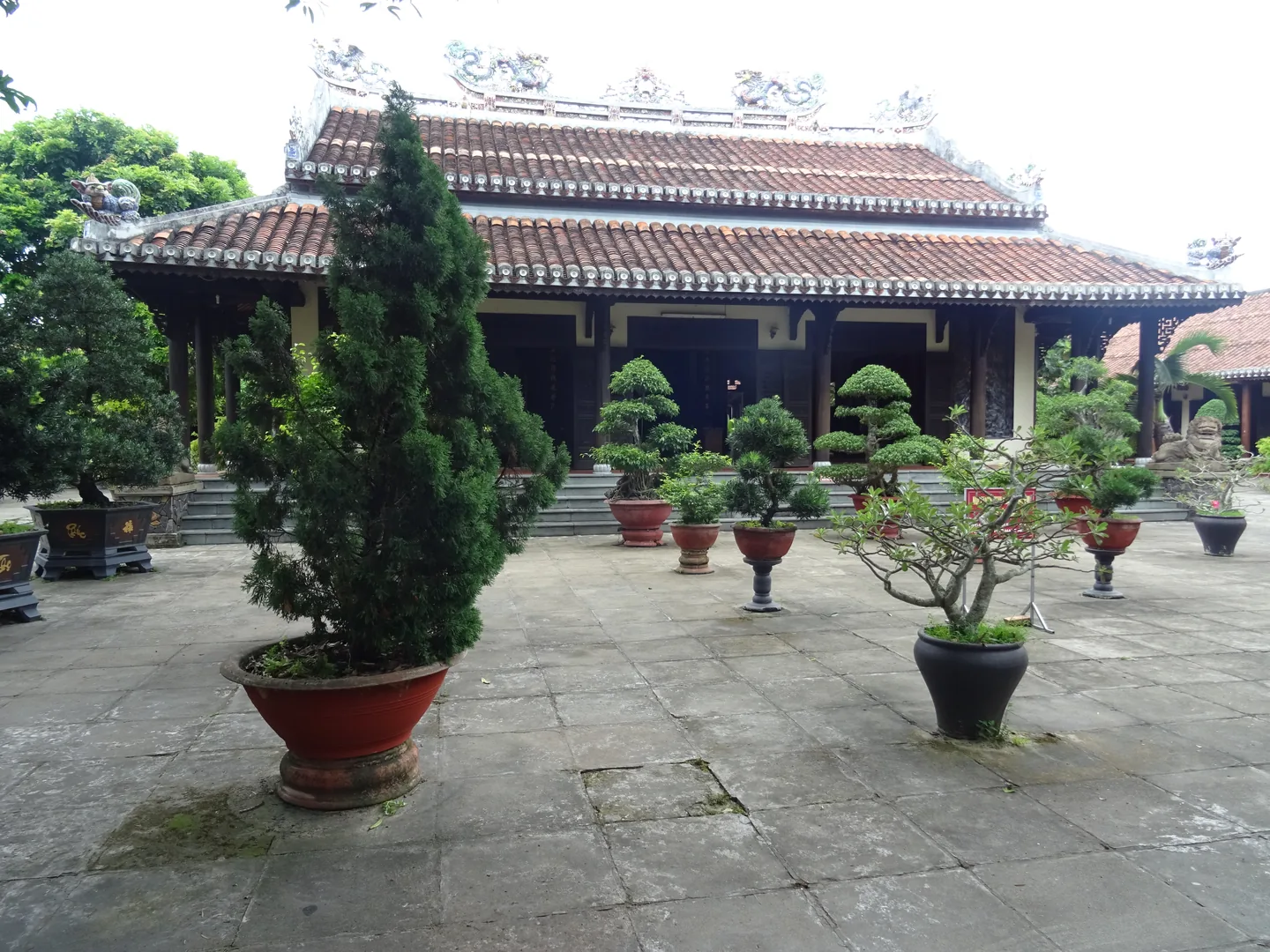
Paved courtyard, potted trees and main hall of Chuc Thanh Pagoda in Hoi An ·
Christophe95 · CC BY-SA 4.0 · Resized and converted to WebP

Understand lineage without forcing a date
Local heritage research connects Chuc Thanh with the monk Minh Hai and the Lam Te–Chuc Thanh tradition. Published local records differ on the precise foundation chronology. This guide therefore does not present one disputed year as settled fact. Ask a knowledgeable guide how a lineage is transmitted through teachers and disciples. That question provides more substance than an unsupported claim that the temple is simply the oldest. Distinguish a founder’s biography, a lineage’s origin and the construction history of the buildings you can see.
Observe buildings as layers
The conservation record describes repeated rebuilding and a complex of halls and side buildings. Do not assume all visible architecture survives unchanged from the foundation period. From a place where visitors are allowed, look at the relationship between roof, supporting timber and courtyard rather than trying to identify every object. If there is interpretation on site, use it to separate a documented feature from your impression. Religious objects are not props: do not reposition them, strike instruments or step across boundaries to obtain a closer picture.
Prepare a quiet visit
Confirm current visitor access directly before travelling, including which gate and areas are open, whether a service is underway and whether photography is appropriate. Wear clothing suitable for a place of worship and follow local directions about shoes and movement. Ask before photographing monks or worshippers; an open outer gate does not imply access to living quarters. If the interior is unavailable, accept a shorter permitted visit rather than pressing for an exception. Keep transport and return arrangements flexible, and do not advertise a meditation session, ceremony or guided activity unless the monastery has actually confirmed it. Allow a quiet pause rather than scheduling constant commentary throughout the grounds.
Ask VietnamGuide AI
Ask VietnamGuide AISources
Explore more
- Duc An house: reading Hoi An’s history of books and political networks
Understand Duc An house through books, anti-colonial networks and its preserved domestic architecture, without assuming current visitor services.
- Tran family chapel: ancestry and thresholds in Hoi An
Understand the Tran family chapel at 21 Le Loi through ancestral worship, domestic space and the meaning of its threshold, with respectful visitor planning.
- Cam Pho communal house: village life beneath Hoi An’s trading history
Read Cam Pho communal house through its village function, ceremonial architecture and archaeological evidence, with careful visit planning.