Travel guide
Duc An house: reading Hoi An’s history of books and political networks
Duc An house at 129 Tran Phu is a focused choice for travellers who want to look beyond Hoi An’s trading-port image. The Hoi An Museum’s account connects this preserved old house with the circulation of progressive literature and anti-colonial political networks. The value of a visit is in understanding how an ordinary address could connect reading, meetings and wider historical change, rather than treating every old house as the same architectural stop.
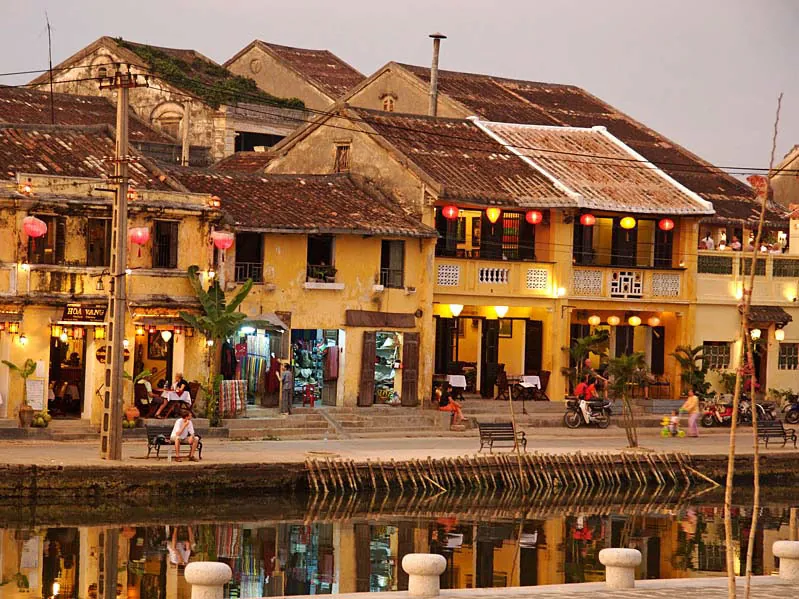
Illustration of Hoi An’s historic town setting; not the featured building or a museum interior. ·
Jean-Marie Hullot · CC BY-SA 3.0 · Resized and converted to WebP

Begin with books, not a list of dates
The museum describes the house as a place where patriotic books and progressive literature circulated in the early twentieth century. This is an important difference from a guide concerned mainly with shopfronts and merchandise: the object moving through the house was also information. Ask what the exhibits or explanations show about that circulation.
Distinguish between an original object, a reproduction and an explanatory display. A room associated with a historical event does not prove that all its present furnishings belonged to that event. If no label explains an object, avoid attaching a dramatic story to it simply because it looks old.
Follow the documented political sequence
The official museum account identifies October 1927 as the establishment here of the Hoi An Vietnam Revolutionary Youth Association, with Phan Them, also known as Cao Hong Lanh, as secretary. It also records a provincial organisation meeting in March 1929 and later use of the house for liaison and meetings.
Read those stages as changes in the house’s role, not as a claim that a single meeting explains an entire national history. The museum records a search and the prosecution of Phan Them in 1934, after which the house ceased to serve as the organisation’s liaison office. Keep family names, organisations and dates attached to the exact source.
Use the visit for interpretation
The museum notes the survival of the old Hoi An architectural style. Use the physical setting to ask how a domestic property could accommodate the movement of people and documents. Do not invent hidden passages, secret compartments or access to particular rooms when the evidence does not establish them.
Confirm present opening, admission, photography and the language of any interpretation directly before planning around a guided visit. Give political-history reading time within your old-town walk, and compare the story with the broader itinerary rather than adding a second article or stop that merely repeats the same house. Historical evidence is not a current operating notice.
Ask VietnamGuide AI
Ask VietnamGuide AISources
Explore more
- Tran family chapel: ancestry and thresholds in Hoi An
Understand the Tran family chapel at 21 Le Loi through ancestral worship, domestic space and the meaning of its threshold, with respectful visitor planning.
- Cam Pho communal house: village life beneath Hoi An’s trading history
Read Cam Pho communal house through its village function, ceremonial architecture and archaeological evidence, with careful visit planning.
- Quan Cong temple: trust, worship and inscriptions in Hoi An
Explore Quan Cong temple at 24 Tran Phu through its merchant-community meaning, timber architecture and restoration inscriptions, with respectful visit planning.