Travel guide
Hoi An Museum of Folk Culture: read the town through everyday life
The Museum of Folk Culture offers a different starting point from Hoi An’s famous facades: the skills and knowledge of the people who made the town work. Choose it if you want to connect buildings with everyday culture rather than collect another architectural photograph.
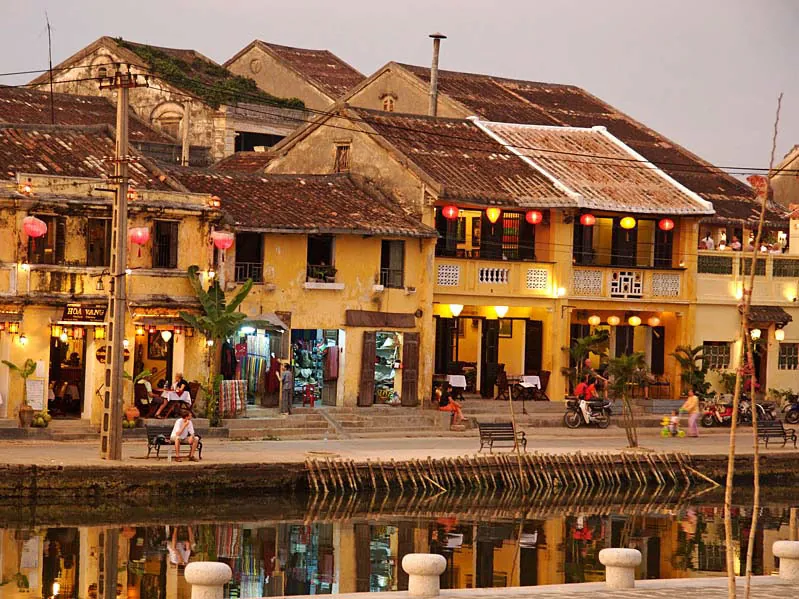
Illustration of Hoi An’s historic town setting; not the featured building or a museum interior. ·
Jean-Marie Hullot · CC BY-SA 3.0 · Resized and converted to WebP

What makes this museum different
The official museum account describes photographs, original objects and demonstrations as ways to explain local intangible culture. Treat objects as evidence of people doing things: making, learning and passing knowledge between generations. Ask what a tool was used for and who would have used it, rather than judging it only as decoration.
For a family visit, give everyone one question to follow, such as how a household skill becomes a community tradition. This creates a useful conversation even when a display is unfamiliar. Do not assume that every craft described by the museum is being demonstrated on the day you arrive.
Notice the house as well as the displays
The museum occupies a traditional two-storey house connecting Nguyễn Thái Học and Bạch Đằng streets. Its official listing identifies 33 Nguyễn Thái Học and 62 Bạch Đằng. The building gives the collections a domestic setting; pause to compare the wooden floors and arrangement of rooms with the streets outside.
A historic house is not automatically an accessible building. If stairs, standing or moving through narrow spaces are difficult, ask which areas can be reached before planning your visit. Follow staff instructions and keep clear of objects and any working demonstrations.
Plan a focused cultural stop
Pair the museum with an unhurried Ancient Town walk, then decide whether a separate craft-village visit would deepen an interest you discovered. A museum explanation and a hands-on workshop are different experiences: neither guarantees the other. Ask separately about language support, demonstrations and any activity fee.
Confirm current admission arrangements and maintenance closures with the museum or official ticket office before going. This guide does not promise a show, a fixed timetable or an included workshop. Allow time to read labels, ask respectful questions and leave with a clearer understanding of local knowledge rather than rushing through several museums.
Ask VietnamGuide AI
Ask VietnamGuide AISources
- 1. hoianheritage.net/vi/trao-doi-chuyen-nganh/chuyen-de-nghien-cuu-trao-doi/thanh-pho-hoi-an-voi-viec-xay-dung-va-ban-hanh-cac-huong-dan-cho-cong-dong-trong-bao-ve-va-phat-huy-gia-tri-di-tich-1143.html
Source checked:
- 2. hoianmuseum.com/vi/about/
Source checked:
- 3. hoianmuseum.com/vi/about/bao-tang-van-hoa-dan-gian.html
Source checked:
Explore more
- Duc An house: reading Hoi An’s history of books and political networks
Understand Duc An house through books, anti-colonial networks and its preserved domestic architecture, without assuming current visitor services.
- Tran family chapel: ancestry and thresholds in Hoi An
Understand the Tran family chapel at 21 Le Loi through ancestral worship, domestic space and the meaning of its threshold, with respectful visitor planning.
- Cam Pho communal house: village life beneath Hoi An’s trading history
Read Cam Pho communal house through its village function, ceremonial architecture and archaeological evidence, with careful visit planning.