Travel guide
Hoi An Museum of Trade Ceramics: objects from a maritime crossroads
At the Museum of Trade Ceramics, a fragment can be more revealing than a complete decorative vase. The useful question is how an object connects Hoi An with other places. This is a museum for travellers interested in trade, material culture and the evidence behind the town’s international past.
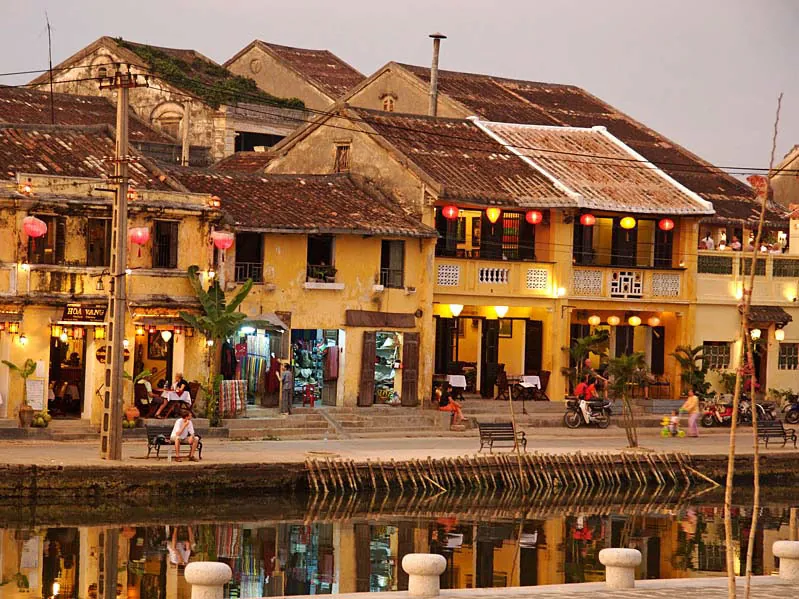
Illustration of Hoi An’s historic town setting; not the featured building or a museum interior. ·
Jean-Marie Hullot · CC BY-SA 3.0 · Resized and converted to WebP

Read ceramics as evidence of exchange
The official museum introduction describes archaeological finds from Hoi An and their relationship to maritime commerce. Look beyond colour and decoration: the shape of a vessel, its stated origin and the place where it was excavated answer different questions. A production origin does not by itself prove who owned the object or which voyage brought it here.
Start with one labelled object rather than trying to memorise every date. Ask how its archaeological context helps explain the port. Distinguish an excavated find from a reconstruction or explanatory image when the label makes that distinction. This approach rewards curiosity even if you know little about pottery.
A town house is part of the visit
The museum’s official address is 80 Trần Phú. Its setting is a traditional two-storey house with a wooden balcony, front and rear spaces and a connecting section around an open courtyard. Notice how the building organises light and movement as well as how it accommodates exhibits.
This is not the same experience as making pottery at Thanh Hà. Choose the museum for interpreting objects and exchange; choose a separately confirmed workshop if your priority is shaping clay. For anyone who finds stairs difficult, ask which display areas can be reached before committing to a route through the house.
Make a practical museum plan
Combine the museum with a short stretch of the Ancient Town rather than treating all historic buildings as interchangeable stops. You might compare what the ceramics reveal about exchange with what you can see in the surrounding streets. Keep these observations separate from claims that a particular modern shop follows an ancient trading tradition.
Check current admission, maintenance closures and available language support with the museum or official ticket office. Do not assume a pottery lesson, guide or special activity is included. Follow photography instructions, avoid touching objects and allow enough time for labels: the value here lies in reading evidence, not simply counting rooms.
Ask VietnamGuide AI
Ask VietnamGuide AISources
- 1. hoianheritage.net/vi/trao-doi-chuyen-nganh/chuyen-de-nghien-cuu-trao-doi/thanh-pho-hoi-an-voi-viec-xay-dung-va-ban-hanh-cac-huong-dan-cho-cong-dong-trong-bao-ve-va-phat-huy-gia-tri-di-tich-1143.html
Source checked:
- 2. hoianmuseum.com/vi/about/
Source checked:
- 3. hoianmuseum.com/vi/about/bao-tang-gom-su-mau-dich.html
Source checked:
Explore more
- Duc An house: reading Hoi An’s history of books and political networks
Understand Duc An house through books, anti-colonial networks and its preserved domestic architecture, without assuming current visitor services.
- Tran family chapel: ancestry and thresholds in Hoi An
Understand the Tran family chapel at 21 Le Loi through ancestral worship, domestic space and the meaning of its threshold, with respectful visitor planning.
- Cam Pho communal house: village life beneath Hoi An’s trading history
Read Cam Pho communal house through its village function, ceremonial architecture and archaeological evidence, with careful visit planning.