Travel guide
Precious Heritage Museum: portraits, clothing and the people behind them
Precious Heritage Museum at 26 Phan Boi Chau brings a different subject into a Hoi An walk: the diversity of communities across Vietnam, rather than the trading-port history alone. Réhahn’s photography project connects portraits with clothing, objects and personal accounts. This is a useful choice for visitors interested in textiles, visual storytelling and the people represented in a collection, not simply another stop for photographs.
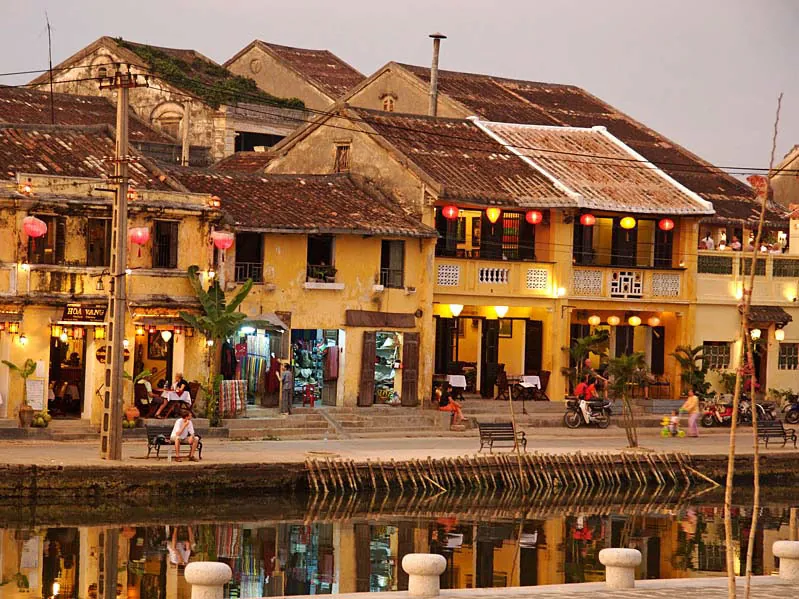
Illustration of Hoi An’s historic town setting; not the featured building or a museum interior. ·
Jean-Marie Hullot · CC BY-SA 3.0 · Resized and converted to WebP

Read the portrait together with its story
The collection grew from the photographer’s work documenting Vietnam’s 54 officially recognised ethnic groups. Read the community name and accompanying account before comparing costume details. A portrait is one person’s encounter with a photographer; it should not stand for everyone’s daily life or suggest that a culture never changes. Choose a few displays to study closely, looking at what the text explains about a garment’s maker, wearer or use, rather than trying to memorise every group name.
Follow the thread from indigo to regional displays
The operator describes fine-art photography, an indigo screening space and displays concerning northern, central and southern communities. Connect the films about dyeing and textile work with the garments on view: colour, fabric and decoration become more meaningful when you consider the work behind them. This is interpretation through a photographer’s collection, not a substitute for visiting a community or a practical weaving lesson. For children, ask them to notice one repeated pattern and then find its explanation together, without treating clothing as a costume to handle.
Plan a respectful visit without assuming extras
The museum’s official information lists free admission; confirm current access and opening arrangements before setting out. Do not assume Réhahn will be present, a family activity will run or that every room will be accessible on your date. Ask staff about photography, flash, touching exhibits and step-free access if these matter to your group. Reading the online collection first can help you choose a focus; afterwards, continue your wider Hoi An itinerary without confusing this national cultural collection with a museum devoted solely to the town. No purchase is needed for this article’s suggested way of looking.
Ask VietnamGuide AI
Ask VietnamGuide AISources
Explore more
- Duc An house: reading Hoi An’s history of books and political networks
Understand Duc An house through books, anti-colonial networks and its preserved domestic architecture, without assuming current visitor services.
- Tran family chapel: ancestry and thresholds in Hoi An
Understand the Tran family chapel at 21 Le Loi through ancestral worship, domestic space and the meaning of its threshold, with respectful visitor planning.
- Cam Pho communal house: village life beneath Hoi An’s trading history
Read Cam Pho communal house through its village function, ceremonial architecture and archaeological evidence, with careful visit planning.