Travel guide
Hoi An’s Sa Huynh Culture Museum: before the trading town
If Hoi An’s merchant houses make you wonder what came before them, the Sa Huynh Culture Museum offers a different historical starting point. Its subject is the region’s early communities, understood through archaeology rather than the facades of the later trading town. Choose it for a deeper timeline, not as another old-house interior.
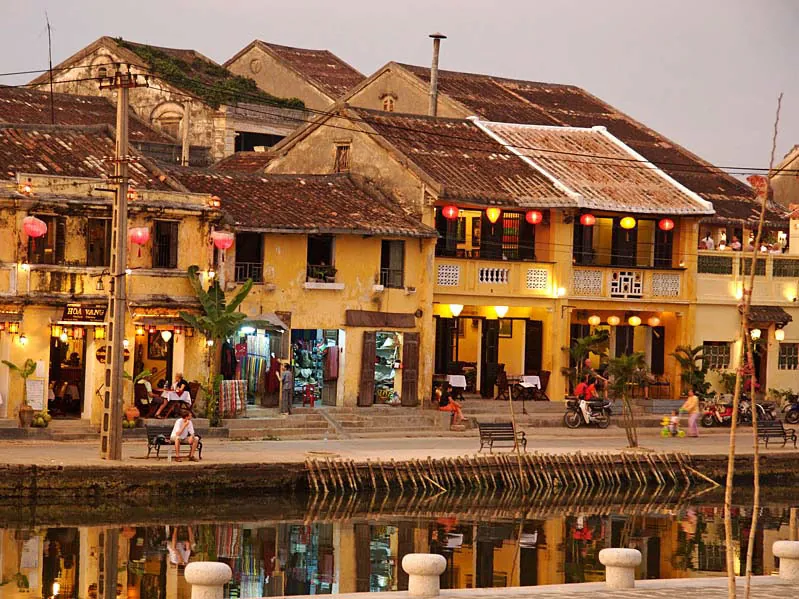
Illustration of Hoi An’s historic town setting; not the featured building or a museum interior. ·
Jean-Marie Hullot · CC BY-SA 3.0 · Resized and converted to WebP

What the archaeological material can tell you
The heritage authority describes objects connected with burial practices, aesthetic ideas and cultural exchange among early inhabitants of the Hoi An area. Burial vessels and associated finds are evidence to interpret carefully, not curiosities to treat as decoration. Read the excavation location and context alongside an object’s material and appearance.
Separate three questions: where was something found, when is it dated, and what do researchers infer from it? These are not interchangeable. The museum can introduce evidence of relationships across places, but one object cannot describe every person’s life. Avoid turning a brief label into a confident story about an individual whose history is unknown.
Keep different places and periods distinct
The museum is listed at 149 Trần Phú in Hoi An. Do not confuse its name with a visit to the Sa Huỳnh coastal area elsewhere in central Vietnam. Here the focus is archaeological culture and material found in the Hoi An region, not a transfer to another destination.
The collections provide context for a town whose story extends beyond its best-known merchant era. It is useful to look for continuity and change without assuming that every later tradition comes directly and unchanged from the same ancient community. If you also visit a ceramics museum, compare its trading focus with this earlier archaeological perspective.
Visit with curiosity and care
Plan a concentrated stop within an Ancient Town walk. A family can follow a simple question: what can a vessel tell us, and what can it not tell us? Discuss how labels distinguish observation from interpretation. Treat funerary material respectfully and follow the museum’s rules on photography and touching exhibits.
Confirm current ticket arrangements, maintenance closures and language support with the museum or official ticket office. Ask about stairs and accessible display areas if mobility is a concern. Collection totals and founding dates vary between official historical summaries, so this guide avoids those disputed figures and does not promise a particular object will be on display.
Ask VietnamGuide AI
Ask VietnamGuide AISources
- 1. hoianheritage.net/vi/trao-doi-chuyen-nganh/chuyen-de-nghien-cuu-trao-doi/thanh-pho-hoi-an-voi-viec-xay-dung-va-ban-hanh-cac-huong-dan-cho-cong-dong-trong-bao-ve-va-phat-huy-gia-tri-di-tich-1143.html
Source checked:
- 2. hoianmuseum.com/vi/about/
Source checked:
- 3. hoianmuseum.com/vi/about/bao-tang-van-hoa-sa-huynh.html
Source checked:
- 4. hoianheritage.net/vi/baotang/Van-hoa-Sa-Huynh/BAO-TANG-VAN-HOA-SA-HUYNH-O-HOI-AN-35.html
Source checked:
Explore more
- Duc An house: reading Hoi An’s history of books and political networks
Understand Duc An house through books, anti-colonial networks and its preserved domestic architecture, without assuming current visitor services.
- Tran family chapel: ancestry and thresholds in Hoi An
Understand the Tran family chapel at 21 Le Loi through ancestral worship, domestic space and the meaning of its threshold, with respectful visitor planning.
- Cam Pho communal house: village life beneath Hoi An’s trading history
Read Cam Pho communal house through its village function, ceremonial architecture and archaeological evidence, with careful visit planning.