Travel guide
Tet Nguyen Tieu in Hoi An: the first full moon and community observance
Tet Nguyen Tieu concerns the first full moon of the lunar year, also called Thuong Nguyen. In Hoi An it is more than a decorative lantern evening: the local heritage museum describes a combination of religious observance, community gatherings and celebration. Knowing this difference helps visitors recognise why an assembly hall or shrine may be busy with worshippers rather than operating simply as a sightseeing stop. The cultural explanation here is not a calendar of publicly accessible events.
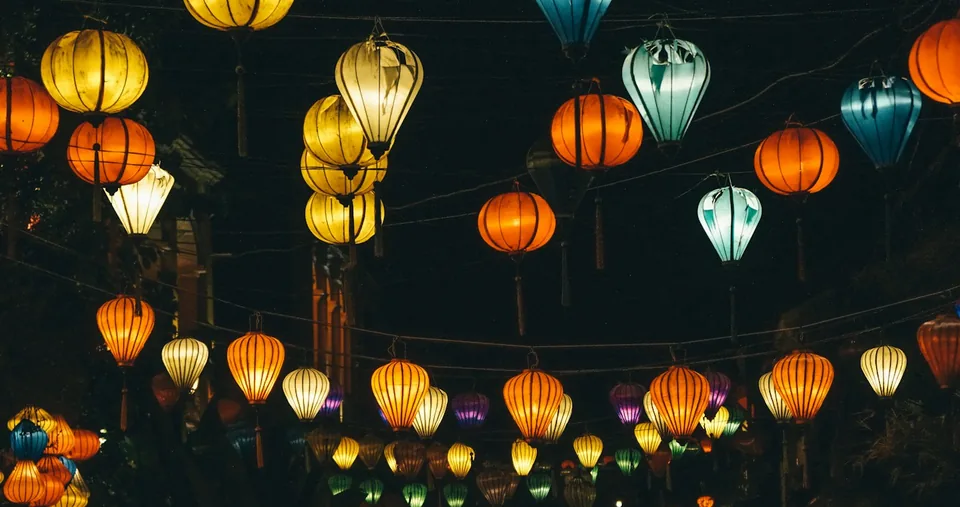
Illustrative context photo: Lantern display in Hoi An illustrating the craft, not a particular workshop
Steven Wilcox · Unsplash License · Resized and converted to WebP
Understand what participants are expressing
The museum connects the occasion with prayers for peace and good fortune, remembrance of community predecessors and gatherings of descendants. It describes observances at assembly halls, Buddhist temples, communal houses and neighbourhood shrines, with different traditions rather than one uniform ceremony. These are participants’ beliefs and social practices, not promises that a visitor will receive luck or protection. When watching, notice who is hosting, where offerings are placed and which part of the space remains in ritual use; do not assume every activity is performed for an audience.
Distinguish it from other lantern occasions
Lanterns, decorations and festive performances can accompany the occasion, but colourful lighting alone does not identify Nguyen Tieu. Its relationship with the beginning of the lunar year and community worship separates it from Mid-Autumn observances and a general evening stroll through Hoi An. The museum interprets it as cultural exchange, particularly Vietnamese and Chinese traditions developed locally over generations. It also records national intangible heritage recognition in 2023. That recognition concerns the living practice; it does not mean every gathering has the same form or that the festival itself is a separately inscribed UNESCO World Heritage property.
Visit as a guest, not as an entitled spectator
Before arranging your trip around a ceremony, ask the current organiser which activities welcome visitors, where to stand and whether photographs are allowed. A historical report or lunar date does not confirm a present-day procession route, admission condition or performance time. Leave entrances and offering areas clear, avoid flash or close portraits without consent and follow staff or community guidance. If travelling with children, explain that quiet waiting may be part of observing worship. An ordinary museum or assembly-hall visit can provide context when no public ceremony matches your dates; do not expect organisers to stage one on request.
Ask VietnamGuide AI
Ask VietnamGuide AISources
Explore more
- Duc An house: reading Hoi An’s history of books and political networks
Understand Duc An house through books, anti-colonial networks and its preserved domestic architecture, without assuming current visitor services.
- Tran family chapel: ancestry and thresholds in Hoi An
Understand the Tran family chapel at 21 Le Loi through ancestral worship, domestic space and the meaning of its threshold, with respectful visitor planning.
- Cam Pho communal house: village life beneath Hoi An’s trading history
Read Cam Pho communal house through its village function, ceremonial architecture and archaeological evidence, with careful visit planning.