Travel guide
Trà Quế vegetable village: read the garden landscape of Hội An
Trà Quế offers a different way to understand Hội An: start with the ingredients growing outside the Ancient Town. This is a guide to the vegetable-growing landscape and its working culture, rather than a cooking-class comparison. Come with curiosity about farming, not an expectation that every plot is an attraction open for entry.
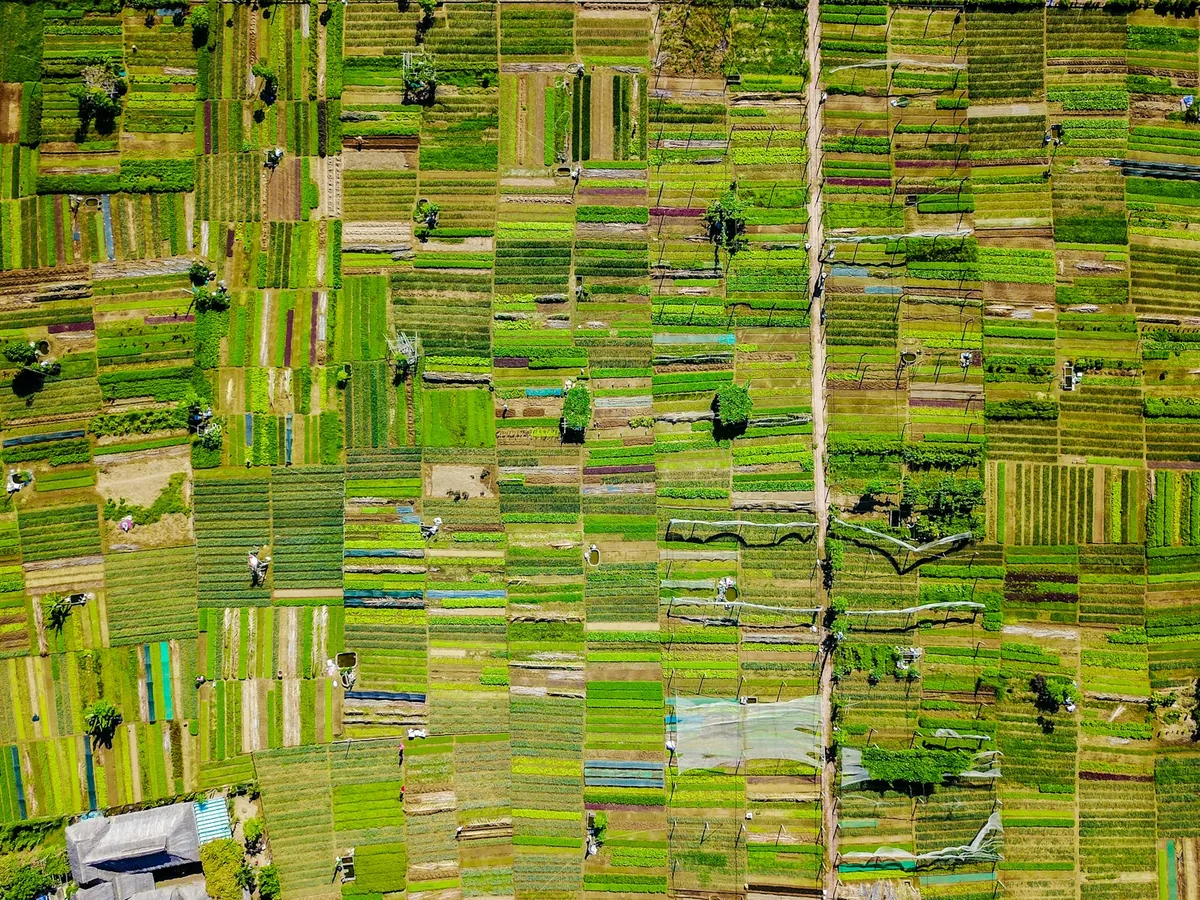
Aerial view of vegetable beds in Tra Que village; archival photograph, not confirmation of current operations.
Rod Long · Unsplash License · Resized and converted to WebP
What makes this a vegetable village
Vietnam’s national tourism authority describes Trà Quế beside the Cổ Cò River, with leafy vegetables and culinary herbs grown using crop rotation and intercropping. Its account also describes river seaweed used as fertiliser. Ask a grower how a particular bed is managed rather than treating one description as a certification of every farm.
Look at differences between leaf shapes, planting stages and harvested beds. A short explanation of what supplies a local kitchen can give the visit more meaning than a photograph alone. Do not taste an unfamiliar plant without permission and identification.
Choose observation or an arranged activity
A village walk and an organised farming session are different experiences. For a hands-on visit, confirm which tasks guests may actually do, who explains them and whether equipment is included. Sowing or watering may be offered, but the day’s agricultural work cannot be guaranteed from a brochure.
If learning about ingredients is your priority, ask for plant identification and growing methods. If you want to cook, use the separate cooking-class guide to compare lessons. Combining both is optional; a long list of bundled activities does not necessarily deepen your understanding.
Visit without interrupting work
Stay on the paths your host identifies, ask before entering plots or photographing workers, and leave tools and irrigation alone. Take sun protection, water and footwear suited to the conditions. Ask about shade, seating and uneven surfaces if anyone in your group needs them.
Confirm the meeting point, current access arrangements and full charge before setting out. Heavy rain or other local disruption may change the plan. Treat older addresses and seasonal advice as context, not today’s forecast. Pair the village with an unhurried Hội An itinerary rather than rushing through several craft villages.
Ask VietnamGuide AI
Ask VietnamGuide AISources
Explore more
- Duc An house: reading Hoi An’s history of books and political networks
Understand Duc An house through books, anti-colonial networks and its preserved domestic architecture, without assuming current visitor services.
- Tran family chapel: ancestry and thresholds in Hoi An
Understand the Tran family chapel at 21 Le Loi through ancestral worship, domestic space and the meaning of its threshold, with respectful visitor planning.
- Cam Pho communal house: village life beneath Hoi An’s trading history
Read Cam Pho communal house through its village function, ceremonial architecture and archaeological evidence, with careful visit planning.