Travel guide
Hoi An Traditional Medicine Museum: a historic shop, not a clinic
The Traditional Medicine Museum is a cultural-history stop for travellers curious about how knowledge, trade and care occupied a Hoi An town house. Its displays explain a profession. They should not be read as a recommendation to buy remedies or seek a diagnosis during a sightseeing visit.
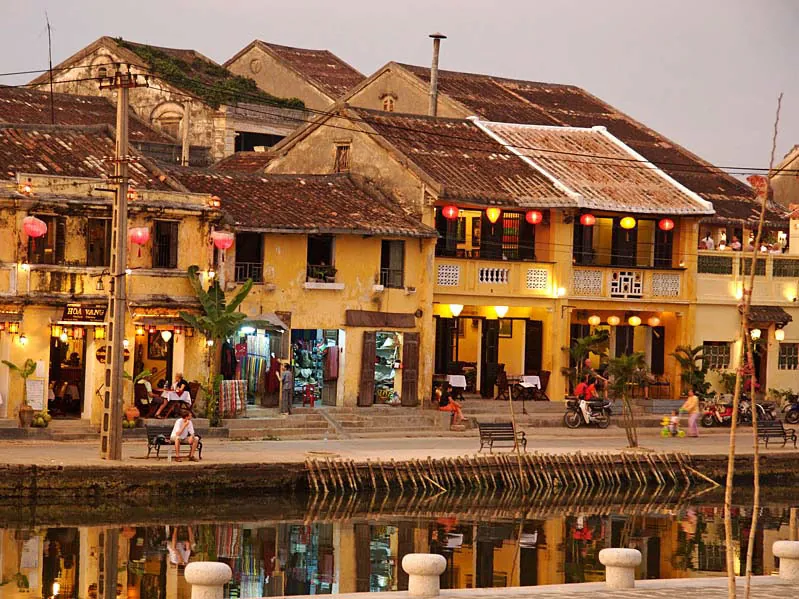
Illustration of Hoi An’s historic town setting; not the featured building or a museum interior. ·
Jean-Marie Hullot · CC BY-SA 3.0 · Resized and converted to WebP

Understand the recreated pharmacy
The official museum account describes a reconstructed traditional medicine shop at the front of the ground floor: medicine cabinets, areas for taking pulses and consulting, and a waiting space. These are interpretations of a historic working environment. Look at how storage, conversation and service are organised instead of treating the cabinets simply as attractive furniture.
A useful question is how the room separates the practitioner’s work from the customer’s experience. Ask staff what is original, reconstructed or shown for explanation when the labels do not settle it. A reproduced scene is not evidence that a consultation service operates there today.
Follow the work through the house
The museum is at 46 Nguyễn Thái Học, in a traditional Hoi An town house. Its official introduction describes a courtyard illustrating drying and keeping medicines, a rear area showing preparation, and upstairs interpretation about the profession in Vietnam and the local region. Read these as stages of work rather than a list of substances to try.
This offers a different focus from general folk culture or trade ceramics: the organisation of one profession within a house. Notice the relationship between rooms and tasks. If stairs or prolonged standing are difficult, ask which areas can be reached and whether information about other areas is available without climbing.
Keep the visit cultural and practical
Do not infer safety, effectiveness or suitability of a remedy from its historical display. Do not taste, handle or purchase an unidentified substance because it appears in a museum story. For health concerns, consult an appropriately qualified healthcare professional rather than using a heritage visit as medical guidance.
Confirm current admission arrangements, maintenance closures and available language support with the museum or official ticket office. Ask separately about any advertised demonstration or activity; none is promised here. Follow staff rules for photographs and exhibits, and combine this focused stop with an Ancient Town walk without assuming treatments or workshops are included.
Ask VietnamGuide AI
Ask VietnamGuide AISources
- 1. hoianheritage.net/vi/trao-doi-chuyen-nganh/chuyen-de-nghien-cuu-trao-doi/thanh-pho-hoi-an-voi-viec-xay-dung-va-ban-hanh-cac-huong-dan-cho-cong-dong-trong-bao-ve-va-phat-huy-gia-tri-di-tich-1143.html
Source checked:
- 2. hoianmuseum.com/vi/about/
Source checked:
- 3. hoianmuseum.com/vi/about/bao-tang-nghe-y-truyen-thong.html
Source checked:
Explore more
- Duc An house: reading Hoi An’s history of books and political networks
Understand Duc An house through books, anti-colonial networks and its preserved domestic architecture, without assuming current visitor services.
- Tran family chapel: ancestry and thresholds in Hoi An
Understand the Tran family chapel at 21 Le Loi through ancestral worship, domestic space and the meaning of its threshold, with respectful visitor planning.
- Cam Pho communal house: village life beneath Hoi An’s trading history
Read Cam Pho communal house through its village function, ceremonial architecture and archaeological evidence, with careful visit planning.