Travel guide
The Nine Urns and Thuy Xuan incense: questions about makers’ hands
A cast image records a chosen representation; an incense stick invites questions about turning materials into a product. Different questions move a craft visit beyond colour photographs.
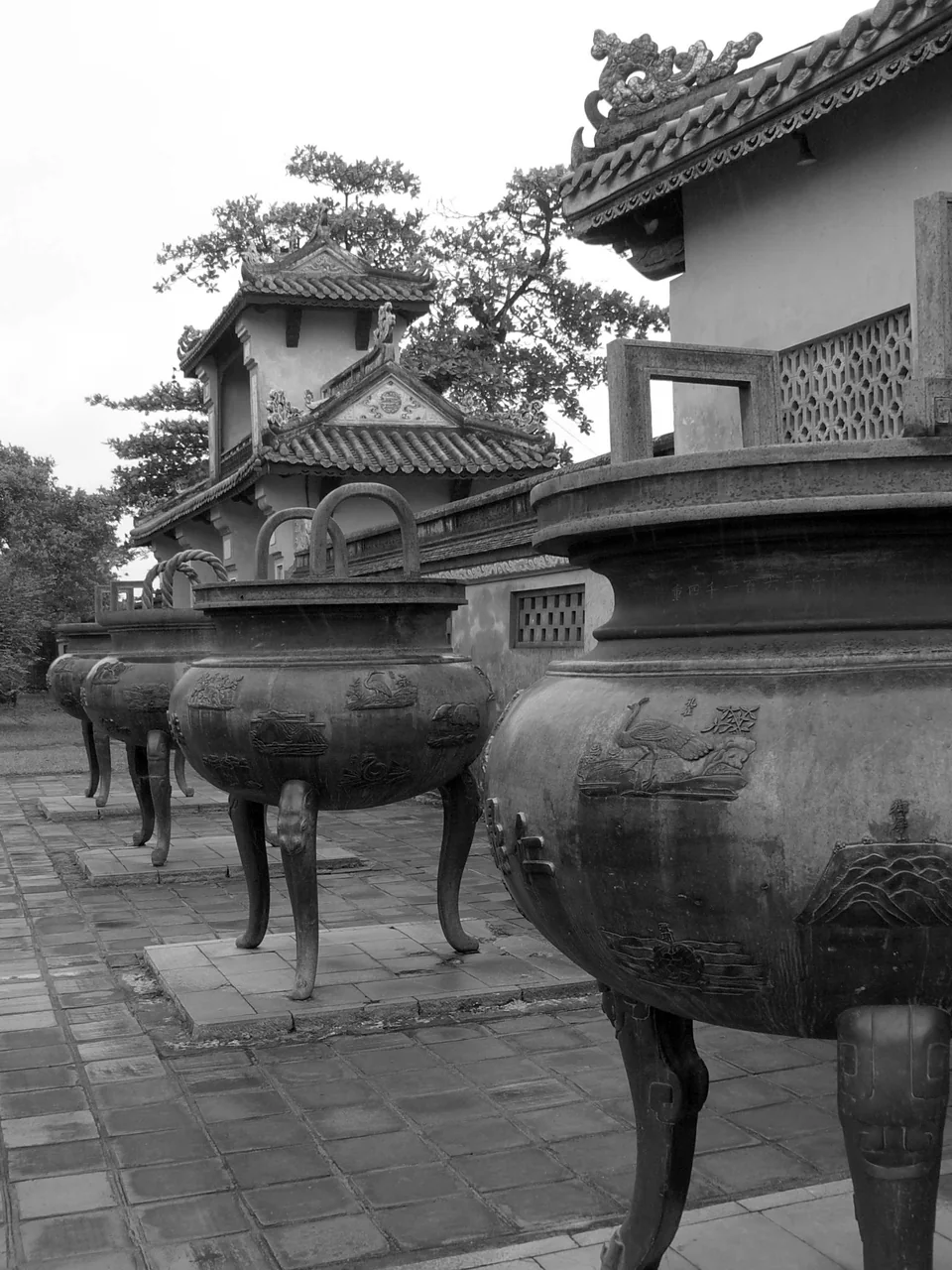

The Mieu and the Nine Dynastic Urns: Nguyen memory in bronze
Cast under Minh Mang in the 1830s, the urns are not nine identical containers. Their handles, supports and relief designs invite comparison. The imagery ranges across mountains, rivers, plants, animals, boats and weapons, bringing a view of the country into the court. Pick two or three subjects to compare rather than trying to identify everything at once. A rice plant or a sailing vessel can make the decoration easier to approach than an unfamiliar imperial title. Look at the relationship between image and inscription, and use a guide or explanatory panel to distinguish a named place from a symbolic creature.
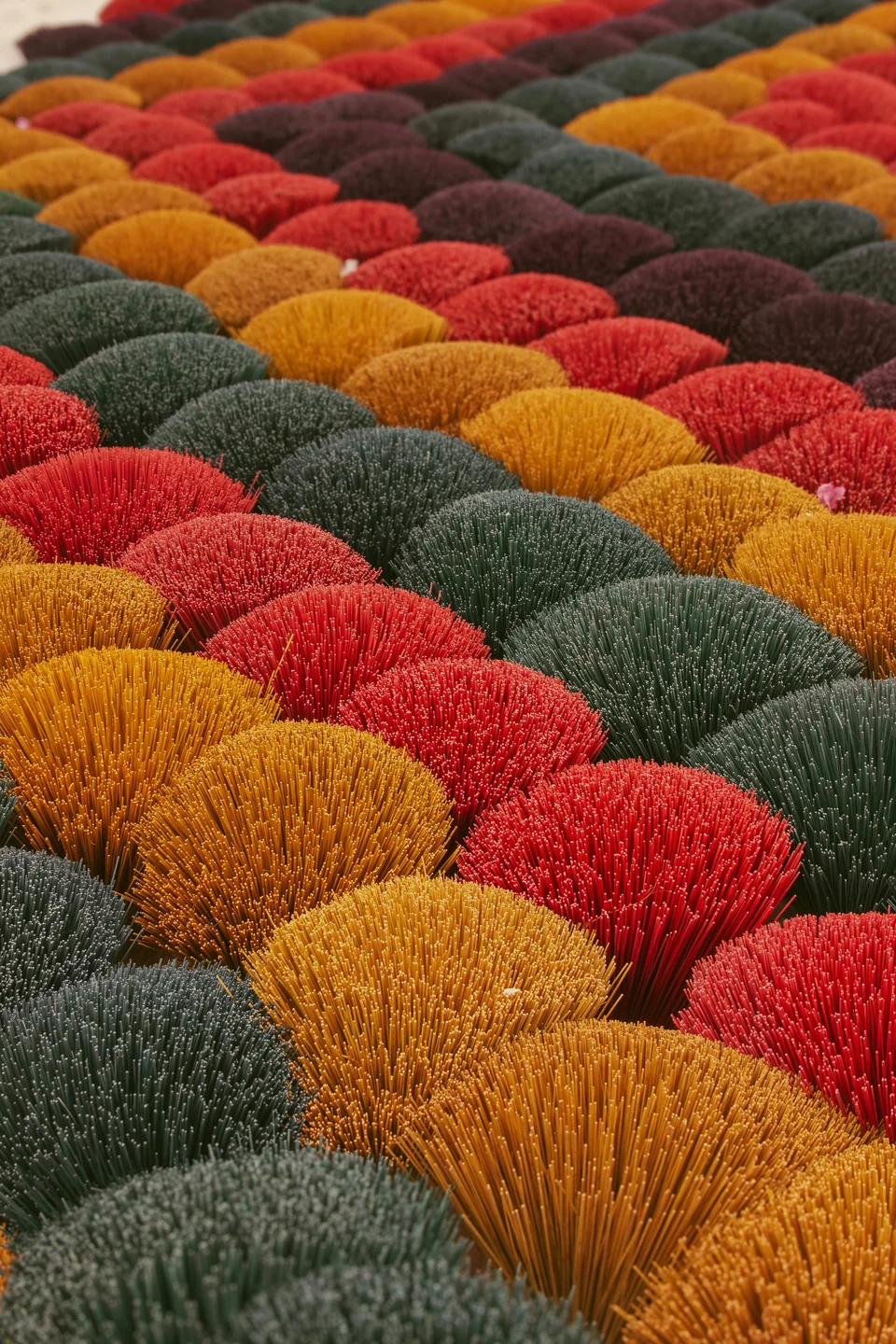
Thuy Xuan incense village: look beyond the colour
Thuy Xuan's craft-and-shop area is associated with Huyen Tran Cong Chua street, on the route towards Tu Duc's tomb and Vong Canh. The flower-like displays often show bundles of brightly coloured stick bases. Look beyond that arrangement to the distinction between the narrow bamboo core and the aromatic coating. Traditional accounts describe bamboo being split into thin cores and dried before a workable incense paste is rolled around it. An even layer needs practised control. Watching that relationship between core, paste and hand movement gives the finished stick more meaning than its colour alone.
A comparison notebook for your visit
| Choice | What to consider |
|---|---|
| Nine Urns | Nine Urns: ask what is depicted, how its name is established and which source explains it. Relief alone does not reconstruct every casting step. |
| Thuy Xuan | Thuy Xuan: ask about the particular product’s materials and which making step may be observed with consent. |
| Take home | Take home: one note about represented content and one about a confirmed process. Display does not prove on-site production or an available workshop. |
Ask VietnamGuide AI
Ask VietnamGuide AISources
- 1. khamphahue.com.vn/Du-lich/Ban-%C4%91o-so/WC-cong-cong/pid/1584/cid/28
Source checked:
- 2. artsandculture.google.com/story/the-nine-dynastic-urns-quang-binh-tourism-department/vAUh_i4YibICLw
Source checked:
- 3. www.unesco.org/en/articles/unescos-memory-world-mow-regional-register-inscribes-20-new-items-recognition-human-innovation-and
Source checked:
- 4. whc.unesco.org/en/list/678/
Source checked:
- 5. khamphahue.com.vn/desktopmodules/DNNTinBai/PrintTinBai.aspx
Source checked:
- 6. khamphahue.com.vn/desktopmodules/DNNTinBai/PrintTinBai.aspx
Source checked:
Explore more
- Hue beyond the throne: Dien Tho and Tu Hieu
Look beyond emperors’ biographies through two different traces: a queen-mother residence and remembrance of court workers. Neither place tells the whole story of the people associated with it.
- Bridge or gate: two kinds of passage in Hue
A village bridge and an imperial gateway both cross a boundary, but serve different purposes. Read function at Thanh Toan and Ngo Mon before looking for a photograph.
- Museum objects and the Nine Urns: two kinds of historical evidence
An exhibited object and a scene cast in bronze can both evoke life, yet provide different evidence. Try a two-column notebook while exploring Hue.