Travel guide
Japanese Covered Bridge: looking beyond Hoi An’s landmark photograph
Chùa Cầu, also called the Japanese Covered Bridge or Lai Viễn Kiều, rewards more than a quick photograph. It represents connections between communities in the old trading port. Visit with a question in mind: how did a useful crossing become a symbol of Hội An? The bridge is one focused heritage stop, rather than a complete Ancient Town itinerary.
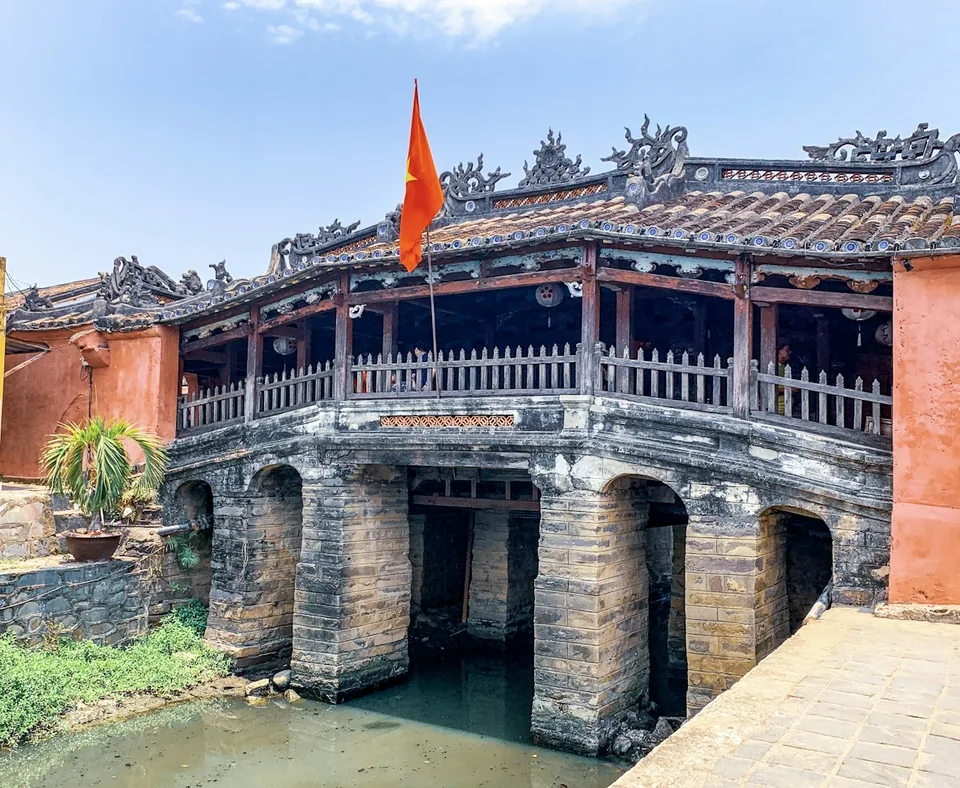
Japanese Covered Bridge in Hoi An, archival view; not current-condition evidence
Marina Lobato · Unsplash License · Resized and converted to WebP
Notice the covered crossing
Begin by looking at the roof and supporting structure from an allowed public viewpoint. Then compare the outside silhouette with what can be seen along the crossing, if access is permitted. Thinking about shelter, movement and construction gives the building context beyond its famous outline. Do not climb, lean on delicate elements or move barriers to find a camera angle.
Lai Viễn Kiều carries the sense of welcoming friends from afar. That name offers a useful starting point for discussing the town’s commercial and cultural connections; it does not mean every decorative story is a documented historical event.
Understand a building that has been repaired
The heritage conservation centre records repeated repairs over the bridge’s life and notes uncertainty about its exact original construction dates. Avoid treating one popular year as a settled fact. The structure you see reflects care, adaptation and conservation as well as its early history. Historical repair lists are not a description of present access or the latest works.
Ask a guide to distinguish documentary evidence, local tradition and modern restoration. A photograph cannot establish which individual components are original.
Fit the visit to your group
Check current visitor arrangements and any ticket requirements with the official information point. Ask specifically about the walking surface and available approach if anyone has difficulty with uneven ground. Keep a flexible walking plan instead of assuming unrestricted access.
Make room for residents and other visitors; pause for photographs where you will not obstruct movement. Combine this focused stop with the existing two-day Hội An guide when planning the wider stay. Current hours, charges and temporary restrictions need a separate check.
Ask VietnamGuide AI
Ask VietnamGuide AISources
Explore more
- Duc An house: reading Hoi An’s history of books and political networks
Understand Duc An house through books, anti-colonial networks and its preserved domestic architecture, without assuming current visitor services.
- Tran family chapel: ancestry and thresholds in Hoi An
Understand the Tran family chapel at 21 Le Loi through ancestral worship, domestic space and the meaning of its threshold, with respectful visitor planning.
- Cam Pho communal house: village life beneath Hoi An’s trading history
Read Cam Pho communal house through its village function, ceremonial architecture and archaeological evidence, with careful visit planning.