Travel guide
Cat Ba Market: read the island through its seafood stalls
Cat Ba Market makes the island’s connection with the sea tangible: seafood is sorted, displayed, weighed and discussed rather than simply presented as a finished restaurant plate. A visit is most rewarding when you treat it as a working market with local customers, not a staged attraction. The destination operator identifies a central-town seafood market and dried-seafood shopping, but its promotional language should not be taken as a guarantee of every stall’s quality, origin or opening time.
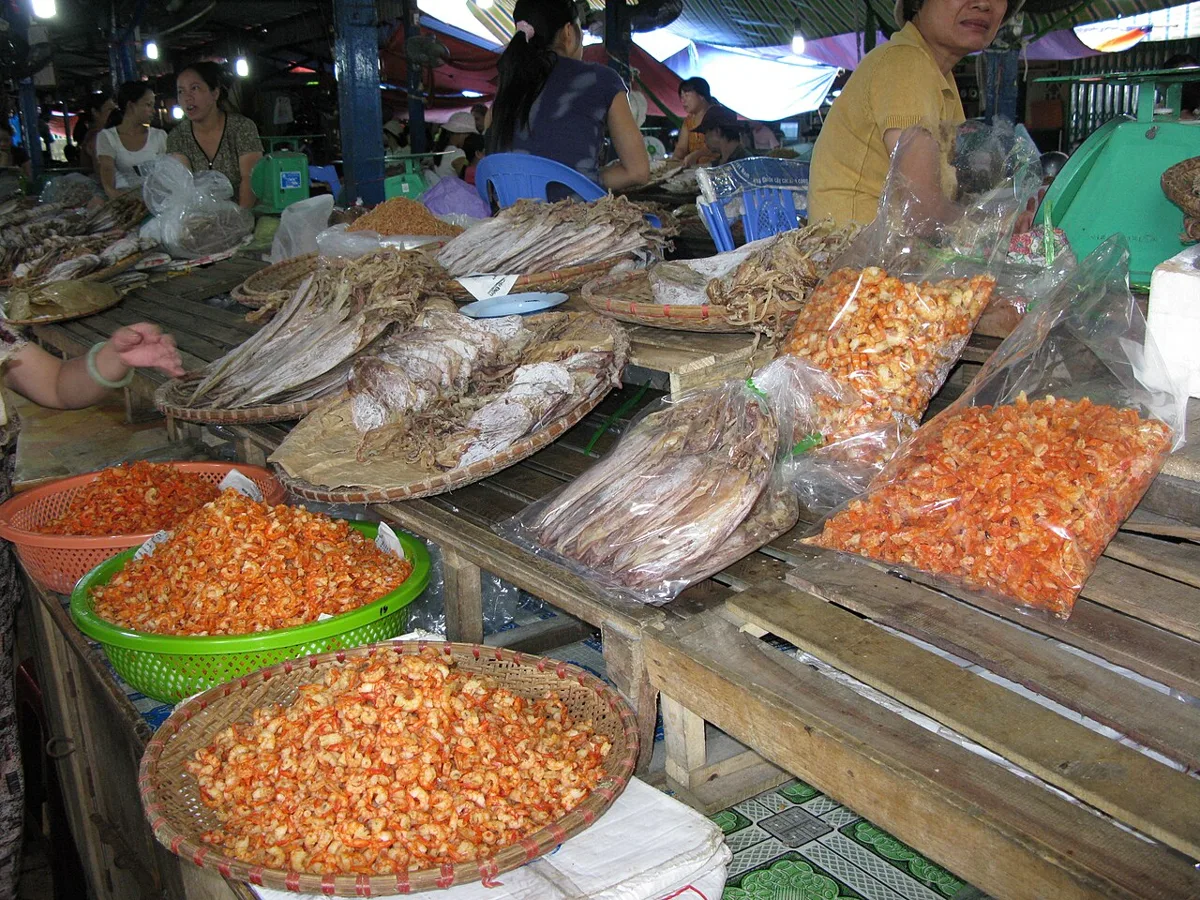

Look at categories before choosing a purchase
Begin by walking through without shopping immediately. Notice the difference between fresh seafood intended for cooking, dried products intended for storage and prepared food sold for eating now. Cat Ba culinary descriptions highlight squid, mantis shrimp, crab and geoduck among the island’s seafood associations; a stall’s actual stock will vary. Ask a vendor to show the name of an unfamiliar product in writing. A local name or an attractive display does not tell you whether the item was caught nearby, farmed or brought from elsewhere.
Turn a purchase into a realistic meal
Before buying live or fresh seafood, decide who will prepare it. A hotel room without cooking facilities is not a practical destination for a bag of raw ingredients. If a stall or nearby kitchen offers cooking, agree the preparation and total charge before selecting the quantity. A simple question about how many diners a portion serves is useful, because shells and whole-fish weight do not translate directly into edible portions. Do not treat a busy counter or moving seafood as proof of hygienic preparation.
Choose dried gifts by the label, not only size
Dried squid is a familiar Cat Ba gift, and the destination guide distinguishes several forms rather than one uniform product. Compare like with like: species or product name, whether it is fully dried or partly dried, package size, ingredients and stated storage requirements. Ask to see the original label and expiry information, not merely a gift bag placed around loose goods. Consider your remaining journey before purchasing; a product needing refrigeration may be awkward during a long transfer. Check the rules of your carrier and destination before taking food across borders.
Visit without getting in the way
Keep clear of weighing, unloading and customer queues. Ask permission before photographing a seller or taking a close-up of their work; a wider view of the stall can communicate the market’s rhythm without putting a face at the centre. Wear footwear suitable for a damp floor and keep your bag close rather than resting it on a food surface. You do not need to buy a large quantity for the visit to be worthwhile. A small clearly labelled purchase, or simply a thoughtful look at the trade, can connect your island trip with everyday Cat Ba.
Ask VietnamGuide AI
Ask VietnamGuide AISources
Explore more
- Lan Ha Bay day cruise: choose the route, not the longest checklist
Compare Cat Ba day cruises by boarding pier, usable time on the water, village stops, included services and the activities confirmed for your departure.
- An overnight Lan Ha cruise: read the hours behind the two-day label
Check embarkation, cabin arrangements, excursion transfers and the real second-day schedule before booking an overnight cruise through Lan Ha Bay.
- Lan Ha or Ha Long: choose the bay through your starting point
Compare Lan Ha and Ha Long by embarkation, shore visits, onward travel and the cruise itinerary rather than a blanket promise of fewer crowds.