Travel guide
Chicken hotpot with la e in Da Lat: aroma, portions and sharing
Lẩu gà lá é is associated with Phu Yen cuisine and is also sought out by visitors eating in Da Lat. Enjoying it in the highlands does not make it a dish invented here. Its appeal is a shared pot of chicken broth scented with lá é, an aromatic herb related to basil, with chilli according to the preparation.
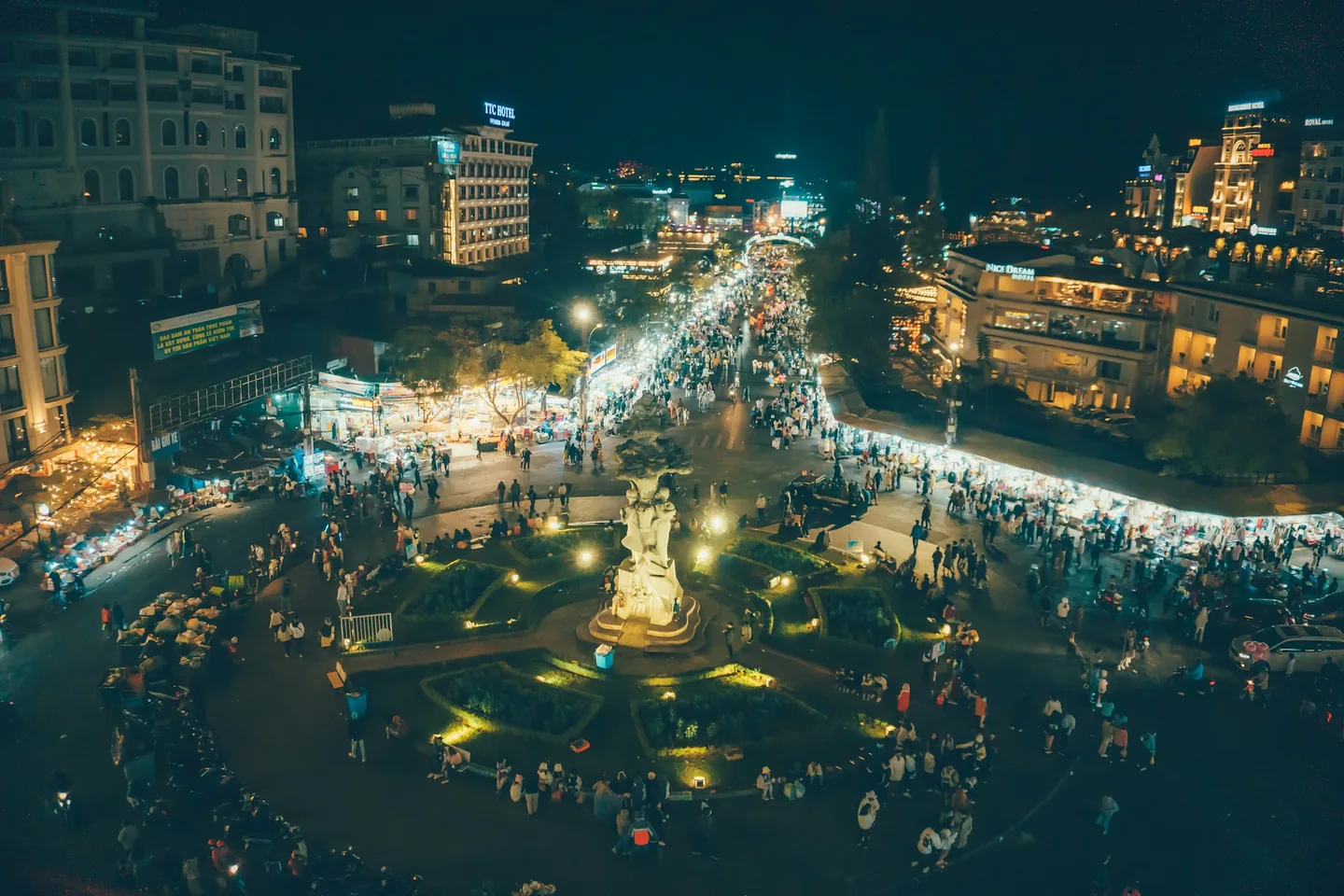
Illustrative photo: Da Lat Market and night stalls seen from above.
Tien Vu Ngoc · Unsplash License · Resized and converted to WebP
Understand the flavour before choosing
The aromatic leaves are central, not simply decoration on an ordinary chicken soup. Chicken, mushrooms and bamboo shoots may feature, but recipes differ. Ask the restaurant what is in its pot and how strongly it is seasoned. A fragrant broth can still contain substantial chilli; request chilli separately if possible. Confirm the actual ingredients rather than treating a translation such as lemon basil as a complete description of the meal.
Match the order to your group
Ask what the named pot size includes: chicken quantity, vegetables, mushrooms, noodles and any extras. A size described for several people depends on appetites and other dishes. Start with one suitable pot before adding more. For children or someone avoiding an ingredient, discuss a separate portion with staff. Removing visible bamboo shoots or leaves does not remove their contribution to the broth. Check sauces and seasoning as well as the main ingredients.
Give a shared meal enough time
Hotpot works best as a seated meal with time to eat together, not a rushed stop before a fixed pickup. Ask staff how the pot is served and which additions still need cooking; do not assume everything arriving at the table is ready to eat. Keep the hot vessel away from a child's reach and ask for a stable table. Confirm the full order and extras before starting. Arrange the return journey if dinner is far from your accommodation.
Ask VietnamGuide AI
Ask VietnamGuide AISources
- 1. vinpearl.com/vi/lau-ga-la-e-phu-yen-dak-lak
Source checked:
Explore more
- Da Lat villas: reading architecture from the street
Plan an observant walk among Da Lat’s villa architecture, with public viewpoints, private-property boundaries and colonial context in mind.
- Cau Dat: tea hills and highland agriculture
Explore Cau Dat as a working tea landscape, separating field views, tasting and farm access from cloud-chasing promises.
- K’Ho coffee: beans and the people who grow them
Plan a respectful K’Ho coffee visit near Da Lat: producer questions, workshop expectations, photography and useful buying choices.