Travel guide
Hoi An’s Japanese merchant graves: evidence, memory and a respectful visit
The Japanese merchant graves add a quieter dimension to Hoi An’s trading history. Rather than treating them as a romantic photo trail, ask what an inscription can actually tell us about people who settled here. These are burial places with local custodians and surroundings, not interchangeable attractions on a guaranteed walking route.
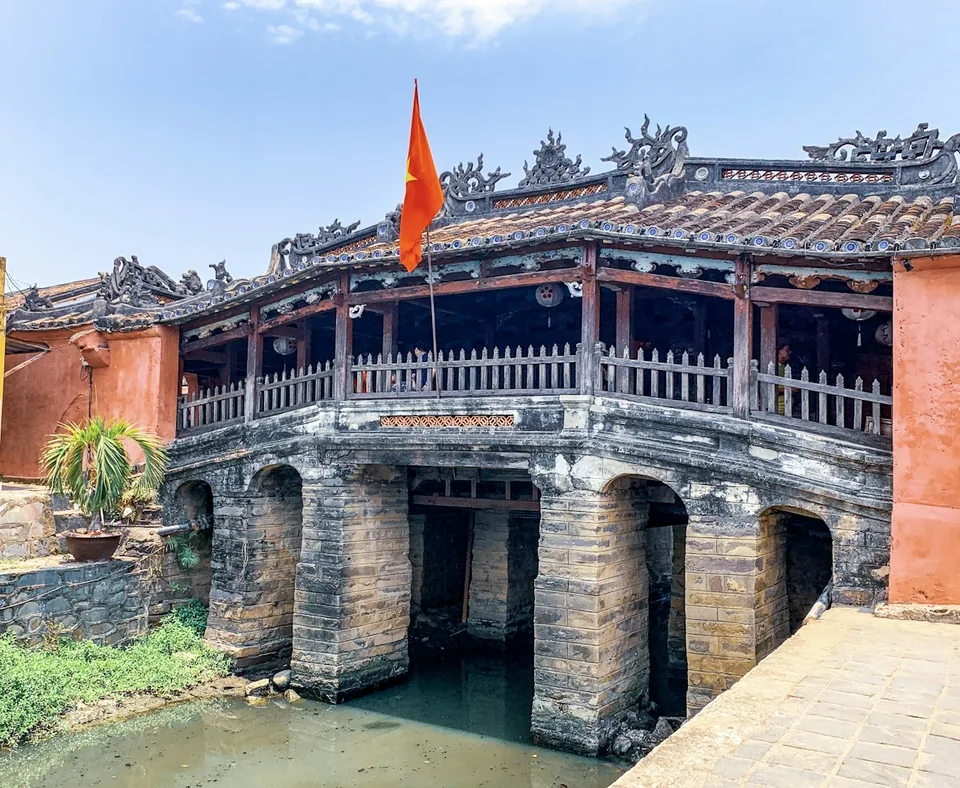
Illustrative context photo: Japanese Covered Bridge in Hoi An, archival view; not current-condition evidence
Marina Lobato · Unsplash License · Resized and converted to WebP
Begin with names and inscriptions
Heritage research identifies surviving graves associated with Tani Yajirobei, Banjiro Suminobu and Koubunken Gusokukun. The Tani study describes a saddle-shaped mound, a sandstone stele and an inscription dated to 1647. Those material clues place an individual within the seventeenth-century presence of Japanese merchants in Hoi An.
The same research distinguishes the inscription from a story about Tani returning to Hoi An for a loved one. Treat that account as a transmitted story, not a fully verified biography. A moving narrative can enrich memory without replacing what the stone and historical research establish.
Notice uncertainty and later care
The heritage study of Gusokukun explicitly leaves his exact seventeenth-century grave date unresolved between two calendar possibilities. It also says evidence is insufficient to confirm a popular claim that he governed the Japanese quarter. Avoid turning an uncertain title or date into a confident caption.
Look for the difference between a historic stele, the mound and later memorial or restoration records. The Gusokukun account documents repairs involving the Japanese community in 1928 and conservation work in 2000. Later care is part of the site’s story; a repaired element does not make the whole place a newly invented monument.
Plan remembrance, not unrestricted access
Ask the heritage information office or a knowledgeable local guide to identify the exact grave and current approach. Historical neighbourhood names are not a current route instruction. Confirm whether the path crosses a field or private land and ask permission where necessary; this guide does not establish public access to every plot.
Keep off the grave structure, leave offerings and inscriptions untouched and avoid photographs that intrude on residents or ceremonies. A single carefully explained visit may be more valuable than trying to reach all three. No opening hours, entry fees or complete connecting route are verified here; retain the distinction between research interest and access permission.
Ask VietnamGuide AI
Ask VietnamGuide AISources
Explore more
- Duc An house: reading Hoi An’s history of books and political networks
Understand Duc An house through books, anti-colonial networks and its preserved domestic architecture, without assuming current visitor services.
- Tran family chapel: ancestry and thresholds in Hoi An
Understand the Tran family chapel at 21 Le Loi through ancestral worship, domestic space and the meaning of its threshold, with respectful visitor planning.
- Cam Pho communal house: village life beneath Hoi An’s trading history
Read Cam Pho communal house through its village function, ceremonial architecture and archaeological evidence, with careful visit planning.